After

Rob Scheider, best (?) known for his role as police chief in “Jaws,” died of complications from a staph infection on Sunday. He had multiple myeloma. You can read the NY Times story here: http://tinyurl.com/3ayolx.

I heard about his death on the one o’clock Italian news yesterday. The story provided no details, except that he had died after a “long illness.” To be exact, the translation from Italian would be “he disappeared after a long illness” (è scomparso dopo una lunga malattia). Disappeared. Long illness.

I admit, euphemisms bother me now. I hope I don’t sound morbid (!), but now, if I am told or hear that someone has cancer, I want to know what type of cancer it is. Etc. I am no longer scared of discussing cancer and death. Before my diagnosis, though, I most certainly avoided the subject.

If you ignore it, it won’t touch you, right?

Wrong. Funny how things change. After.

Cats and beer…

We spent the morning in the front and back gardens (we live in a row house) preparing for spring: pruning, weeding, cutting, raking leaves…we are sooooo exhausted right now. It’s on days like these that I wish we didn’t have a garden at all. Ouch, my back hurts! But then I look fondly at my pruned raspberry patch, my pomegranate tree, my herbs and all the flowers, mainly daffodils and crocuses, that are popping up everywhere, and change my mind. It really is pretty.

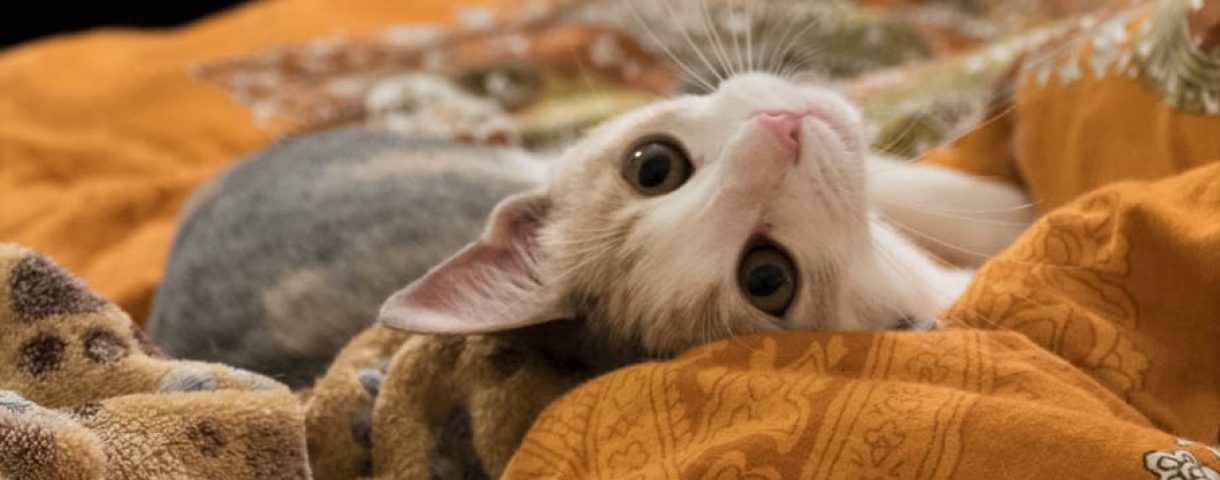
Anyway, I thought I would post these photos I took of Peekaboo last night at the dinner table. Or rather, on the dinner table!

Dinner is always a bit of a struggle, especially with this curious little one. She likes to jump up on the table and watch us while we eat. Theoretically, that would be okay (we have a very big country dining table), but she begins edging very close to the food, the way cats do, inch by inch, as if they didn’t care…then all of a sudden her nose is in your plate, or she is dipping one of her paws into your glass of water. She’s a pest, but such an adorable one…

Irresistible.

And wouldn’t this have made a great beer ad?

(P.S. In case you were wondering, I don’t drink beer, but Stefano likes a glass with dinner, sometimes).

Report of tainted curcumin…

Yesterday I read a Google Alert concerning a recent report by Consumer Lab (“a leading provider of consumer information and independent evaluations of products that affect health and nutrition”) on some tainted curcumin brands. You can read the CNN story here: http://www.healthnewsdigest.com/news/Research_270/Consumers_Warned_of_Lead_in_Some_Turmeric_Supplements.shtml

Needless to say, I was alarmed by the mention of an incredibly high amount of lead found in a “popular” curcumin brand and by the news that some brands did not provide the amount of curcuminoids stated on the label. Yikes! In order to view the report, I subscribed to Consumer Lab for an entire year. Interesting website. I am now glad I subscribed. I will be checking out other supplements as well.

I cannot publish the curcumin report here, for obvious reasons, but I can tell you (without getting into trouble, I hope!) the following: the “popular” brand reported by Consumer Lab is no longer available. It was the NSI, or Nutraceutical Sciences Institute, Superior Turmeric Curcuma Longa Non-Irradiated (400 mg per capsule). In the beginning, I confused it with the NSI curcumin that I have taken on occasion. Luckily for me, these are two different products. Phew! (I still have quite a bit of this particular brand in my cupboard!)

Another brand that was found to contain an excess amount of lead was Solgar. Surprise.

But my biggest surprise was to see that Ageless Cures Curcumin C3 Complex contained only 49,3% of “claimed curcuminoids.” I have never bought or used this brand, but I know that other curcumin-takers take it. Another brand that did not pass the Consumer Lab test was Physician Formulas, which had a very low content of curcuminoids. And Vibrant Health did not specify the “plant part” used in its product, so it failed the test as well. Never heard of either of these.

I would like to point out that most curcumin brands, of the ones that were tested, passed the Consumer Lab test. About two-thirds. I was very disappointed, though, to see that the brand that I usually take had not been tested. Drat. Oh well…

Go easy on medicated lotions, creams, gels

I am as busy as a buzzing bee today, correcting tests and preparing classes for tomorrow (etc.), so I don’t have time to post about much of anything.

But I read something yesterday that made me realize that even seemingly harmless stuff like over-the-counter creams may be not so…harmless, after all. Thanks to Healthblogs’ new updated Health News Section, I was able to read the following article: http://tinyurl.com/25obv2 Scary! My recommendation: when buying anything, follow Puzzola’s example (I took this photo a couple of years ago) and keep at least one eye wide open. And use that wide open eye to read the list of ingredients. 

Oops, forgot something!

As my family doctor pointed out to me this afternoon, my IgG has decreased compared to my pre-curcumin tests. And it has remained stable since then. I have been stable, therefore, for two years. That’s a rather important point!

IL-17 and medical day: stability!

Well, the answer to yesterday’s question is as follows: yes, we can. Curcumin inhibits IL-17. Figures, huh? There are three (possibly more) studies that mention the IL-17-inhibiting role of curcumin. The abstracts can be viewed here: http://tinyurl.com/2rn3jy (a 2003 study), http://tinyurl.com/ynvkdj (a 2005 study). Thanks to Sherlock, I read the full study of the third abstract, a 2004 study published in “Cellular Signaling” and titled, get this: “Interleukin-17 signal transduction pathways implicated in inducing matrix metalloproteinase-3, -13 and aggrecanase-1 genes in articular chondrocytes” (see abstract: http://tinyurl.com/2lfy7t).

All these studies tell us that curcumin inhibits IL-17. Simple as that.

Haematologist appointment. Stefano and I went to see my haematologist at noon today. I asked her outright to classify me. She said that I am definitely not MGUS, no way. My IgGs are too high, and let’s not forget the 40% bone marrow biopsy result (from last year). So it’s official: I’m "smouldering," which means, among other things: "to exist in a state of suppressed activity." Heh. She examined my tests more in detail and pronounced me stable. Stable as a rock. So, all good news.

I asked her what the half-life of a myeloma cell is. She replied that it depends on a variety of factors, such as the type of myeloma and its proliferation rate. It can be calculated using cells from a BMB. She told me that a myeloma cell can live up to several months. MONTHS? Drat, now I am almost sorry I asked!

She confirmed that I am taking the correct amount of vitamin D. She also told me NOT to stop taking curcumin when I get a cold or an infection of any sort. Even though it inhibits NF-kB, she said that stopping cold turkey (odd expression, that one, when you think of it) is not a good thing. Good to know.

Let’s see. I am going down my list of questions and scribbles right now, not necessarily in order of importance. Oh, speaking of importance, this is exciting: I gave her the myeloma stem cell study (she had read the abstract, not the full study) and the DMAPT study, and she is going to find out about the DMAPT trial that should be starting soon in the UK to see if I qualify for it. She is going to contact the researchers that she knows personally. I am at a loss for words. Can’t wait to hear back from her. Gulp!

She is going to push the lab technicians to get more details on my “old” bone marrow samples, which would be fantastic. And, last but not least, she is going to try to attend the upcoming presentation in Calenzano, where I will be giving a brief speech. She is leaving for a conference in Turkey that evening, so it’s iffy. Even if she isn’t able to make it, however, she is sending five people from her lab to the presentation. Five? Fabulous.

Last but not least. For the first time, she wrote that I am stable "perhaps" due to curcumin. And that I should continue with the same treatment. (When my GP read those two sentences this afternoon, he got very excited.)

As we stood up to leave at the end of the visit, she asked me to explain why there are cases of myeloma in India, if curcumin is so effective. I answered that there are only a handful of cases compared to the Western world, and besides, I managed to add with a straight face, those folks undoubtedly didn’t use turmeric in their diet. My husband let out a snort, and she gave me a big smile and shooed us out of her office.  Hehe. I love my haematologist. Good sense of humour.

Yes, today was a good day.

Another pro-inflammatory cytokine: IL-17

About a month ago I read a Science Daily article with an intriguing title: “Protein’s New Role Discovered In Autoimmune Disease.” (see: http://tinyurl.com/yrzaud). In a nutshell, University of Alabama researchers identified a previously unknown effect of a T cell-derived cytokine named interleukin-17, or IL-17 for short. This is an “immunity protein,” that helps induce and mediate pro-inflammatory responses, such as allergies, autoimmune diseases and whatnot. IL-17 also induces the production of many other cytokines, such as the infamous IL-6! Uh-oh!

Now, the news reported in Science Daily is that when the “messenger” signals from IL-17 were blocked, the disease-causing B cells dropped from 17 to 2 percent. Coincidence? Ah, no. As the articles states, “The drop was a clear sign that IL-17 plays a major role on shaping B cells’ ability to create more and more disease-causing antibodies.” So if IL-17 can be inhibited, B cells are slowed down in their efforts to create wacky antibodies. And here I thought B cells were the good guys, the cells that defend us against infections etc. Well, in autoimmune diseases they can go bonkers, as we can read in the Science Daily article.

After reading this article, I immediately checked out if IL-17 is involved in myeloma. Of course it is. Hah, figures! For instance, see the abstract of this 2006 study (http://tinyurl.com/2786gs), which shows that IL-17 “is a CD4 T-cell-derived mediator of angiogenesis that stimulates vascular endothelial cell migration and regulates the production of a variety of proangiogenic factors, such as tumor necrosis factor-alpha (TNF-alpha) and vascular endothelial cell growth factor (VEGF).” Need I add more? Oh, ok, just this bit: the researchers conclude that “IL-17 plays a role in the promotion of angiogenesis and associated disease progression in MM.” Bad, bad IL-17!

I found an interesting bit of information on IL-17 in the MD Anderson October 31st 2005 “Weekly News and Notes for Patients, Families and Visitors.” The article is titled “New immune cell found to be a key to inflammatory diseases” (see: http://tinyurl.com/2moorw). MD Anderson and other researchers discovered a new type of T-cell, called THi, produced IL-17, which they “linked to an immune system gone awry." An awry immune system? Well, if that doesn’t sound familiar…! Before this discovery, IL-17 was known to play a role in autoimmune and inflammatory diseases, but its origin was a mystery. The study’s lead investigator stated that “These findings suggest that shutting down the activity of these THi cells might stop chronic inflammatory diseases from developing in the first place.” How about that?

Okay, IL-17 is now officially on my list of evil pro-inflammatory cytokines. It is also connected, by the way, to NF-kB (I need to do more research on this topic; I may get to it, someday…). IL-17 also stimulates IL-8, which is an angiogenesis cytokine in myeloma. This reminds me that one of my future projects is to create a permanent page listing all of these pro-inflammatory cytokines and their role in myeloma progression. Eh.

I would like to end today with a question: is there anything that we can do to inhibit IL-17? Or could we already be doing something? The answer to this question will be in tomorrow’s post. Oh, and tomorrow is "medical day." I am seeing my haematologist at noon (with a list of questions as long as the highway between Florence and Bologna), then my family doctor in the afternoon (shorter list of questions). I imagine I will have quite a long post tomorrow! 

w00t!

As frequently happens, I was looking up something entirely different in the Merriam-Webster Dictionary online when I came across its 2007 Word of the Year contest. WORD contest? Irresistible to an etymology freak…(more on the contest here: http://tinyurl.com/yu5rfv).

The winner for 2007 was “w00t,” an expression of happiness or excitement, usually after a victory of some sort, used in a similar way to woohoo or yay! On Urbandictionary.com I read the following: “’w00t’ was originally an truncated expression common among players of Dungeons and Dragons tabletop role-playing game for ‘Wow, loot!’"

One of the runners-up was “sardoodledom,” which means a play with a contrived melodramatic plot. George Bernard Shaw invented this term while criticizing one of the plays by Victorien Sardou, a 19th century French playwright. The word is thus a composite: Sardou-doodle-dom. On World Wide Words (fantastic website: http://tinyurl.com/avg8t) I read that in the 2007 U.S. National Spelling Bee, this word gave a case of the giggles to one of the young contestants. I can see why…

Another favourite of mine: the adjective "Pecksniffian," which means "unctuously hypocritical." We also have the noun “Pecksniffery.” Love it! From World Wide Words, we learn, or remember!, that Seth Pecksniff, a land surveyor and architect in Dickens’ Martin Chuzzlewit, “though in appearance the most upright of men who prated about high moral principles and benevolence, was an awful hypocrite, full of meanness and treachery.” Ah yes.

Okay, that’s enough etaoin shrdlu for today! 

Less IgA than a newborn…

It’s a rainy day in Florence, and I am alone in the house (as “alone” as one can be with four cats, hah!…they are napping now, gathering up enough strength to totter downstairs for some lunch…), so it’s a perfect morning to do some research. I am working on at least four different topics that I find enthralling. But right now I would like to post about something different.

Yesterday I wrote a post to the MMA patient mailing list (by the way, you may sign up for it by clicking on the link in my Blogroll, just scroll down until you reach: "Join the MMA myeloma patients’ listserv") asking a question about my recent test results. I got many useful replies, some in private, some in public.

A very interesting reply was posted by one of my blog readers. This morning I wrote to him asking for permission to post his reply on my blog as well, and he kindly consented. So here goes:

“Immunoglobulins are produced by B-lymphocytes. The faulty ones produce monoclonal immunoglobulins or parts thereof. Immunoglobulin-G is the most prominent type. A molecule decays, after 21 days typically half will have been reabsorbed by the body. The IgG count is the total concentration of immunoglobulin-G in mg/dl, normal and monoclonal. The m-spike is a measure of only the monoclonal Ig. In normal individuals IgG counts are as given below. 

Reference values for normal immunoglobulins
 
 
in mg/dL
 
Age
IgA
IgG
IgM
newborn
1 – 50
200 – 1070
0 – 80
1 – 6 months
2 – 80
200 – 1070
25 – 150
7 – 12 months
8 – 90
200 – 1070
25 – 150
1 – 6 years
15 – 160
340 – 1240
45 – 250
7 – 12 years
35 – 250
650 – 1600
45 – 250
12 years and up
40 – 350
650 – 1600
50 – 300

A rise of the IgG may be caused by acute or chronic infections and does not necessarily mean increased MM. A change in m-spike may reflect a change in MM plasma cell concentration. Remember that the IgG number or m-spike is always somewhat inaccurate, so a small change may simply be due to a uncontrolled variation in the measurement procedure.”

Interesting. As for the issue of "molecule decay," I will be looking more deeply into it and will ask my haematologist about it on Wednesday. For now, I will leave it pending. Well, this has certainly been an interesting exchange. I now have plenty of fodder for thought. But it’s time for lunch so I am getting off the computer.

One last comment: thanks to this chart, I found out that I have less IgA than a newborn, and as much IgM as a newborn (barely)! Ahhhh, I feel so young, today…hmmm, almost…newly born! 

The dual nature of NF-kB

This is the continuation of my January 22 post. From the Aggarwal (et al) NF-kB study, we know that when NF-kB “is found to persist in the nucleus, it is referred to as constitutive activation. […] The precise role of constitutive activation in tumors is not known but has been linked to resistance to apoptosis in human cutaneous T-cell lymphoma cells. It is tempting to believe that a similar mechanism accounts for the progression of all tumors that constitutively express NF-kB, but such a link has yet to be clearly identified.”

This entire section is interesting, actually, since it reports that another thing that has not been identified is the actual stimulus that renders NF-kB active all the time. What is clear, though, is that “Cells that express constitutively activated NF-kB are resistant to various chemotherapeutic agents and radiation treatment.”

And read this. In renal cell carcinoma (RCC) patients, “Serum C-reactive protein (CRP) elevation correlated with the increase in NF-kB activation; therefore, NF-kB may be a cause of the inflammatory paraneoplastic syndrome.” As we Myeloma Club members know, CRP reflects IL-6 activity and is thus an important marker for us. (My CRP, by the way, is within the normal range.) At any rate, I thought it interesting that this study reports a connection between high CRP and NF-kB. Well, well.

Another interesting quote: “Another virus that contributes to human cancer via NF-kB is the Epstein-Barr virus (EBV) implicated in Burkitt’s and Hodgkin’s lymphomas. The EBV nuclear antigen (EBNA)-2 and latent membrane protein (LMP)-1 enhance NF-kB activity thereby preventing apoptosis in EBV-transformed B cells.” While I was in grad school in Toronto, I tested positive for EBV. I was quite ill for about a month, tired all the time, etc., as I recall. Anyway, coincidentally (or…not?), a few years later I was diagnosed with MGUS. Well, I suppose it’s pointless to speculate, but this is not the first time I have read about the EBV-cancer link. Let’s proceed.

I found a fascinating study online (full study: http://tinyurl.com/2ntng6) titled “Good cop, bad cop: the different faces of NF-kB” that appeared in the January 2006 issue of “Cell Death and Differentiation.” It examines the different functions of this transcription factor, including that (drum roll!) of TUMOUR SUPPRESSOR. No kidding. NF-kB can promote both tumour growth and tumour suppression. Bad cop, good cop. How about that?

It is in this study that I read that NF-kB can be triggered by hundreds of “activators.” Hundreds?  Parts of this study are barely intelligible, but I did manage to grasp a few basic concepts. The “classical” or “canonical” NF-kB pathway occurs when this transcription factor translocates, or moves, from the cytoplasm to the nucleus. This is when NF-kB gets activated by inflammatory cytokines such as tumour necrosis factor (TNF)-alpha and IL-1, in response, say, to a bacterial infection. The rest of that particular paragraph is not meant for non-scientific brains, for sure. So, skip, skip, skip! What matters is that at the end of this complicated process of activation, NF-kB ends up in the cell’s nucleus. This can occur in a matter of minutes. Amazing, eh? Then, once it has performed its good cop duties, under normal circumstances, NF-kB is escorted back (by a gene called IKB-alpha) to the cytoplasm, a process I mentioned briefly in my earlier post.

Then we have the “noncanonical” or “alternative” NF-kB pathway, which is activated by other kinases and, for instance, chemotherapy drugs. Some stimuli, such as UV-C (Short-wave ultraviolet radiation), activate NF-kB both by IKK-dependent and IKK-independent pathways.  Ok, ok, my eyes are glazing over, too, and besides, I don’t want to get into too many details. Let’s stay focused on the main points.

Under certain conditions and in response to certain types of stimuli, it would appear that NF-kB can have proapoptotic effects. This “is consistent with the hypothesis that it is the mechanism of induction of NF-kB that determines its physiological function.” It’s all a matter of context, in other words. The important thing is that “If differences in the NF-kB response to a chemotherapeutic drug also occur in different tumors in patients or between patients with apparently the same type of cancer, the ability to more accurately diagnose NF-kB status could profoundly affect treatment choice and outcome.” (Apart from that unfortunate split infinitive, this is quite an interesting statement.)

We already know that NF-kB has pro-inflammatory effects. But the study shows that “NF-kB activity can also be required for the resolution of an inflammatory response. NF-kB activity in the later stages of inflammation has been associated with induction of anti-inflammatory genes and the induction of cell death. Moreover, inhibition of this late-stage NF-kB activity extended the length of the inflammatory response, inhibited the expression of p53 and Bax, and prevented apoptosis.” So sometimes NF-kB can reduce inflammation. I am not sure what late-stage NF-kB activity means, but the inhibition of the tumour-suppressing p53 gene is certainly not a good thing. More research needed.

Now read this shocker: “Because NF-B can perform a tumor suppressor function in some tissues, will its inhibition actually promote cancer in some situations?” Ouch!

The answer is: probably not, since treatment is “relatively short term,” and thus its inhibition of NF-kB would not have enough time to give rise to cancer. So the inhibition of NF-kB, the study states, seems to be the best approach to treating cancer. If the treatment were long-term, though, such as in the treatment of chronic inflammatory diseases, the “continuous suppression of NF-kB activity over a number of years could manifest itself in, for example, squamous cell carcinoma.”

This is a real head-scratcher. A "damned if you do, damned if you don’t" situation. I’d better stop here before my brain melts. But I have not finished with this topic. Not at all.

A quick update before I sign off to go feed the cats: since my so-so test results, I have introduced flaxseed oil capsules into my protocol, also because Sherlock is taking them, too. A slight change. I will update my protocol soon. Have a great weekend, everyone!