I wonder if these case reports will ever catch the eye of our MM organisations, which, unfortunately, are so heavily sponsored by big Pharma…Doubtful… 😕
Well, Margaret, this is intended to be a celebratory post, and I really don’t have the energy to dive into THAT discussion again. It’s just so bloody frustrating that sometimes I have to let off some steam. But no, not today. Today is a super good day!
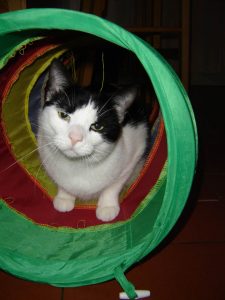
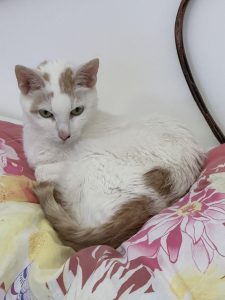
Pinga, 14.5 years old
A new case report, led by Terry Golombick (if you don’t know who she is, you can do a search of my blog…she’s one of my favourite people on the planet…!!!), shows that a patient with intermediate/high-risk MGUS who has been taking curcumin for 16 years has had “a decrease in disease markers and an increase in uninvolved immunoglobulins.”
16 years, eh? That made me realise that I’ve been taking curcumin now for more than 18 years, which means that this patient began just a couple of years after I did…AND a year after I began blogging. I wonder if I know him…Hmmm…I believe I must, but I have so many readers now that of course it’s hard to keep track of all of you…
Please do get in touch with me, Mr. Fabulous Patient, if you happen to read this post. I’d really love that. Thanks! 🙂
Interesting bit: Mr. Fabulous Patient took a very small amount of curcumin every day, only 2.3 grams a day, divided into two doses, which seems to confirm that we all have a different reaction to curcumin. I also guess that it might (must?) depend on WHEN you begin taking it…It makes sense, to me at any rate, that curcumin would have a stronger effect on a MGUS patient than an SMM one, e.g.
Food for thought.
The study concludes: “This case study adds to the body of evidence that curcumin administration may benefit some patients diagnosed with MGUS with little or no toxicity even after 16 years of therapy.”
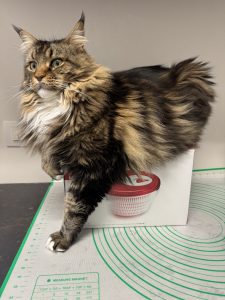
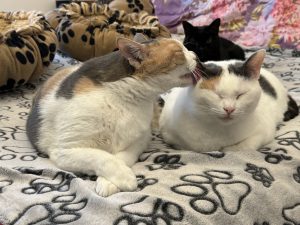
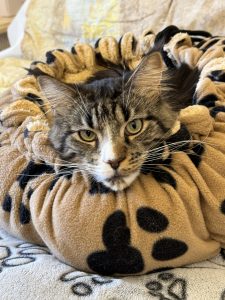
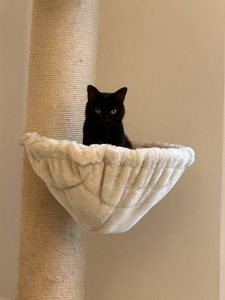
Potter: “This box is mine, only mine, even if I don’t fit on it!”
Yes, indeed…no doubts about that in my mind!!!
I am incredibly happy for Mr. Fabulous Patient as well as for those of us who have been doing so well on curcumin … Today is definitely a day of celebration!!!
Take care, everyone. Oh, and, if you have the time, please go read the study and send me your comments…Thanks!
My faithful nurses (of course, Stefano was number ONE)…
I’m usually soooo careful when I leave the house…If I’m going to be in a crowded situation, such as a supermarket, I pull out and wear an FFP2 mask. I don’t shake hands or kiss anyone, even my closest friends. They all know and respect that…
But on Sunday, March 10, I let down my guard, unfortunately. We went to a friend’s house, and when we left, I gave her a hug, just as she was telling me that she didn’t feel that great (Margaret, duh!). We pulled apart, but the damage was done. The following day she came down with a very bad “flu” (or whatever it was), and that hug, plus hanging out at her house on Sunday, meant that I did, too.
I woke up on Monday with a very high fever (on Tuesday night it went up to 40.4° Celsius), and other symptoms that I shall spare you. 😉 But mainly, the high fever was the biggest annoyance. I was really sick that week…then, slowly, I got better, and I’m absolutely fine now. This “thing,” whatever you want to call it (flu or viral bad stuff) is going around, my doctor told me. And, he added, it takes a while to get back on your feet. No kidding.
Anyway, all is (quite) good now. That’s the important thing. I’ve read some interesting things lately, but I need to rest some more before writing a serious post…I just wanted to publish a wee post on the blog today. And wee it is! 🙂
Take care, everyone, and wear a protective mask in crowded situations, even though it’s no longer mandatory… Better safe than sorry…!!!
Hi everyone! Oh dear, I’ve been gone for quite some time, haven’t I? Life really does get in the way of plans sometimes.
In this period, in addition to being super busy with a million other things, I’ve been focusing on getting my arthritic knee in shape. There’s no going back to the knee I had in my 20s, of course, but I can try at least to stop it from getting worse, mainly with physiotherapy. Okay, but enough about my knee….that’s not the reason I’ve written this post…
Today I have some good news that I’d like to share with you… 😛
Here’s the news: I just received my most recent blood and urine tests, which are about the same as my previous ones. Some numbers have actually improved, such as my C-reactive protein, which is now within the normal range. In sum, no huge changes compared to previous tests, which means that I’m (still) stable. Relief!
Anyway, I hope everyone is doing well…Again, I apologise for being absent on the blog, but my knee is an everyday issue (oh no, no no no!, here she goes on about her knee again… 😉 ).
Speaking of my knee (agggghhhh!), Stefano and I are about to go on an anti-inflammatory diet with the help of a nutritionist…I do hope that this diet will help (it should)…In fact, I wonder if it might help improve my MM markers, too…Hmmm, that would indeed be an added bonus.
And, in case you’re wondering, I’m still taking my high dose of curcumin every day (divided into two doses — half at lunch, half at dinner), to which I’ve now added some boswellia capsules. A recent Italian study showed that boswellia can lessen pain in the…ah yes, you guessed!…in the knee!!! Hehe. Besides, as we know, boswellia is also a MM cell killer, so it should work on both fronts, knee and MM. Too early to tell, though. We’ll have to wait for my next tests…
Okay, off I go. Today is a good day! Take care, everyone! Ciao!
Hello everyone! Time is really flying…it’s Xmas, already??? How did that happen? Anyway, I just wanted to wish you all a very happy and healthful and peaceful holiday…
Just about an hour ago I read some interesting news on the curcumin front, positive news…unfortunately, I don’t have time to write about it now. But I will be looking into it, you can be sure of that…
TAB sent this (see below) as a comment to his older news post, but I decided to put it in a post so more readers will see it immediately. TAB, you are amaaaaazing! A big hug! Margaret. 😀
Here’s his message:
TAB’s Update December 8, 2023
Alive and well at age 82 after dealing with MM (IgA Lambda) for 25 years. I have been off Velcade treatment for a year. I am feeling good with no symptoms. I am taking 6 grams of curcumin, resveratrol, vitamins C and D, selenium and a multivitamin. My blood work is good but M spike is rising. I will probably be going back on Velcade in February 2024 if the M spike keeps rising. My report is available if anyone is interested in a copy. tabbat841@outlook.com
Well, earlier this week we had to say goodbye to our eldest cat, Pavarotta. She was 19 years old.
Here, in brief, is what happened: last Monday, November 27, I heard a scary, very loud howl coming from the dining room, where the kitties have their water fountain. I got there in time to see Pavarotta fall on the floor and begin scrambling about, trying to get up. A few of our other cats came running and sat around her…I think they wanted to help. After hearing my reassuring voice (but I was freaking out, truth be told), she finally lay down and rested for about a half hour, then got up and seemed almost normal. She even ate some wet food. I called the vet hospital immediately but couldn’t get an appointment with our usual vet, and I didn’t want to take her in to see another vet. I made an appointment for the following morning. With our vet.
Our blue-eyed Pavarotta, recent photo
Pavarotta had another neurological issue in the late afternoon…same thing…but again, like the first “fit,” she rested, then got up and even ate some food. At 3 AM, though, another fit, the final one, I think, in retrospect. In the morning, she wasn’t really moving.
She was always such a feisty girl who hated to be picked up, but when Stefano lifted her and put her in the cat carrier, she didn’t move or make a sound. We knew that she wouldn’t be coming home with us…and she didn’t.
Ciao piccolina, ti voglio bene…I never thought I’d say this, but I really miss your ear-splitting howl for attention in the mornings when I go down to the kitchen…
Okay, I’d better change the subject…
Knee news. Ah yes. Well, I finally received a diagnosis for the pain I’ve had in my left knee since July. Yes, July. I didn’t have it checked out back then, because we were about to go on holiday, and I had a zillion things to do. But climbing all those castle stairs in Scotland became agonising for me. When we returned to Italy, I postponed going to the doctor mainly because I had pain only when I went up a flight of stairs, so it didn’t really have an impact on my regular routine. Plus, I was super busy at the time. But, about a month ago, I had had enough and decided to have some tests done.
The diagnosis arrived more than two weeks ago: knee osteoarthritis. That basically means that my knee joint cartilage is gone on one side, and the pain is caused by bone scraping on bone.
But it’s not all bad news: I went to see the surgeon who did my perfect hip replacement two years ago, and he said that even though I’m in stage 4 (and there is no stage 5), the damage is, put simply, on the left side of my knee (he used a more technical explanation, of course), which means I won’t need knee replacement surgery, not now, anyway. Phew!
However, there is no going back. The damage is done. But I can try to stop it from spreading, mainly with physiotherapy. Fine, let there be physiotherapy!!! And even though I haven’t had more than 5 sessions, I already have no pain going up our stairs. No pain. Amazing.
Anyway, unless the pain gets much worse, my surgeon said that I won’t need surgery for six years. Six years…not bad at all! However, I’m aiming for…never! We’ll see…
Okay, that’s about it for now. I hope everyone is doing well. Take care! Ciao!
A dear friend of mine, whom I met via the blog many years ago, has been dealing with an unusual and very serious condition for several months. She asked if she could post an appeal on the blog to see if anybody else has had a similar experience or can help her in any way. If you have any information that might be useful to Clare in this very difficult moment, please let me know, or leave a comment on this post. If you want your comment to remain private, I will definitely respect your wish and send it only to Clare.
Thank you very much.
Here is what she wrote:
I’ve had smouldering Myeloma for 13 years without treatment.
Over the past year and a half I have become more and more out of breath. I thought it was just Asthma. I had an echocardiogram last March which looked normal. Suddenly, in July, my legs swelled up, and I felt even more out of breath and tired. My cardiologist is concluding that I must have Protein Amyloid deposits in my heart from the Myeloma. They couldn’t see any on a heart MRI, however, so I have a heart biopsy coming up to be 100% sure.
I just wonder if anyone has AL Myeloma or any experience of Amyloids from Myeloma.
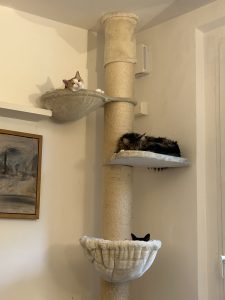
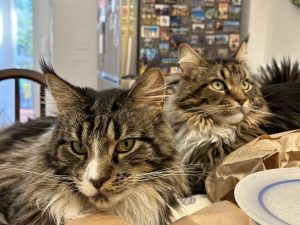
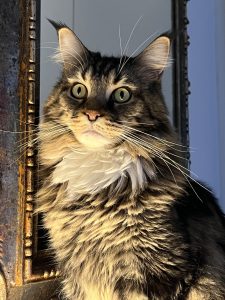
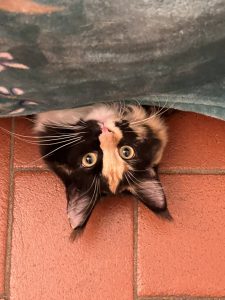
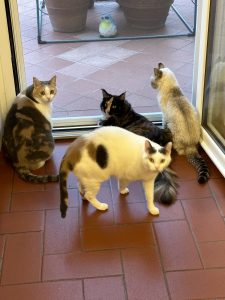
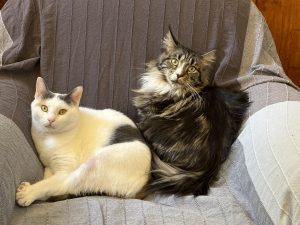
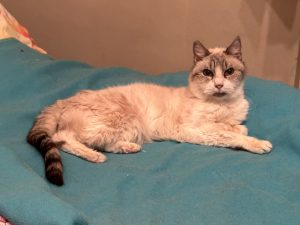
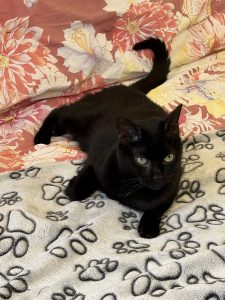
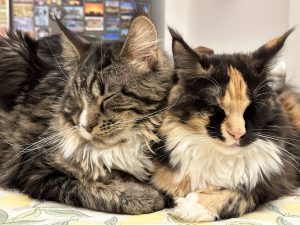
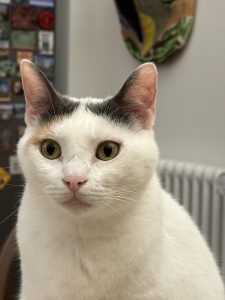
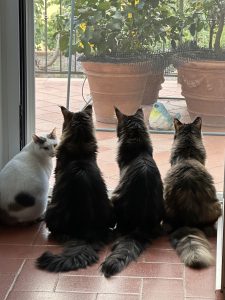
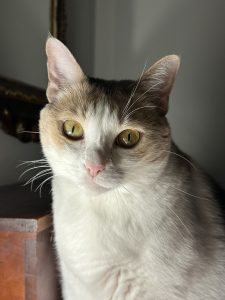
Hey there! This is going to be a kitty post…My cellphone is full of photos of my cats (though there are a million of ’em!), so today I thought I’d share some recent ones, since I have nothing much to report…Here goes! 🙂
Stefano and I spent a bit more than three weeks in Scotland in August, one of our longest holidays ever. What a fabulous trip…
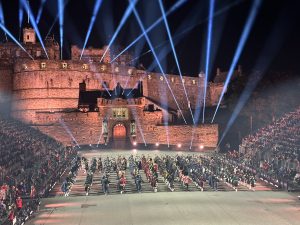
We landed in Edinburgh on August 4th, the day The Royal Edinburgh Military Tattoo started. It was spectacular. My photo (left) doesn’t do it justice. Even though I’d watched a few videos of the Tattoo on YouTube before leaving for Scotland, I had no idea it would be so engaging…so exciting, even. We thoroughly enjoyed it, as clearly did the other spectators. Definitely one of the best times of my life!
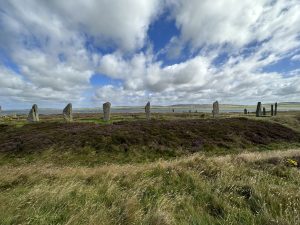
Ring of Brodgar, a huge ceremonial site dating to the 3rd millennium BC
After that first weekend spent in Edinburgh, a city we both adore, we began our road trip. We drove up to Scrabster, located on the northern coast of Scotland, where, the following morning, we caught the ferry to Orkney.
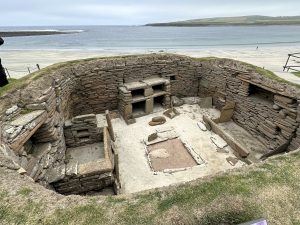
Orkney…what can I say about Orkney? Its group of Neolithic monuments, which was proclaimed World Heritage Site in 1999 by the Unesco, with the name “Heart of Neolithic Orkney,” were absolutely fascinating: the Standing Stones of Stenness (which my automatic spell checker keeps changing to “Sterness” Stones… 😆 ), the Ring of Brodgar, and Skara Brae (Skara “Bread”??? Hahahaha, must admit that my spell checker does have a sense of humor).
Skara Brae, the best preserved prehistoric village in Western Europe…older than the pyramids, even…! Check out the stone dresser and beds…quite amazing, eh? 5000 years old!
These three, plus the Maeshowe Chambered Cairn (which we didn’t manage to get tickets for), are among the most important Neolithic sites in Western Europe. How about that?
Another incredibly interesting site, where you can actually see archaeologists at work, is the Ness of Brodgar, a huge complex built 5000 years ago. When I was younger (40 or so years ago!), I wanted to become an archeologist, and I studied archeology (and anthropology) as an undergraduate, so the Ness of Brodgar dig was dear to my heart…
Marwick Head RSPB nature reserve
The day we arrived, the first thing we did was hike up to Marwick Head where, sigh, we didn’t see any puffins (too late in the season), but where we did manage to see young gannets testing their wings. They would fly out from their nests on the cliffs below us, turn around in a semicircle, and head back to the nest. Over and over again. Oh, and the fulmars, too. So much fun to watch. Too bad my photos didn’t turn out…
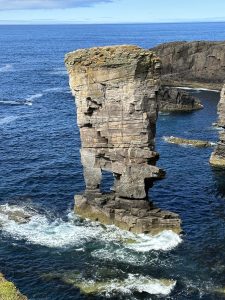
Yesnaby Castle sea stack, Orkney’s second most spectacular sea stack after the Old Man of Hoy…and what a lovely scenic coastal walk to get there, too.
Oh, and the views of the North Sea. From up there, we could see all the way to the Old Man of Hoy, the tallest sea stack in the UK (note: you get much much much closer views of this sea stack on the ferry from Scrabster to Stromness, but on a clear day you can see a tiny thingy in the distance from Marwick Head, too). Anyway, I could have sat on the Marwick cliffs for days…In fact, I would still love to be there. 😉 So relaxing.
So, yes, Orkney was wonderful, magical, but we did have to leave. After five days of exploring the island, we returned to the mainland and began our very slow descent towards Edinburgh.
As I always do when we are about to go on a trip, I had made a list of things not to be missed–castles, mainly. We prefer ruins, generally speaking, but we did see well-kept castles such as the Castle of Mey (the Castle of “Men,” says my spell checker…hahahaha!), where we got some amusing royal gossip from one of the friendly guides.
Nope, sorry, my lips are sealed. 😉
As interesting as the tour was, my favorite castle on this trip was not Mey. It’s hard to choose one in particular, but I have two very special mentions.
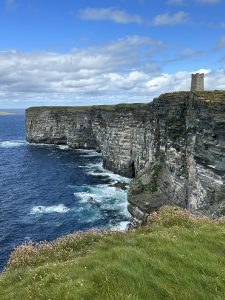
My first mention definitely goes to Castle Sinclair Girnigoe, see photo on right, which actually consists of the ruins of two castles, one from the 15th century, the other from the 17th. It’s located on a rocky promontory and has small sea stacks all around it, as you can see (the ruins are in the back of the photo). Spectacular.
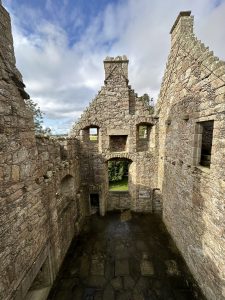
Tolquhon Castle
My second mention has to go to Tolquhon Castle whose tower dates to the 1400s. It is also said to be haunted, like many of the castles we visited, although we didn’t see any ghosts (now, wouldn’t THAT have been fun?). One of the photos I took (these are all from my cellphone, btw) does look like the face of a creature from another world, doesn’t it? Whoooooo! Lots of house martins flying around in the courtyard and rooms…Lovely little birds…
Okay, if you ask me about my favorite castle garden, well, that’s much much easier: the walled garden of 16th century Crathes Castle, no question. Lovely flowers and plants.
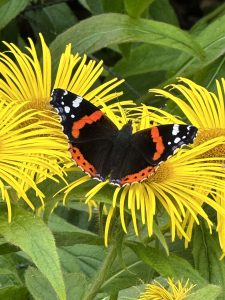
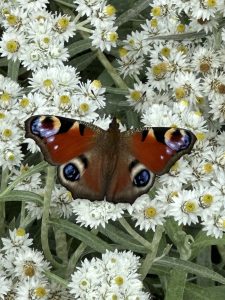
A close second for me was Castle Fraser where I was “attacked” by red admiral and peacock butterflies…Obviously, I’m kidding…it was truly a magical experience.
Red Admiral, Castle FraserPeacock butterfly, Crathes Castle
I’ve never seen so many butterflies, flying all around and above me, which reminded me a bit of the Hitchcock movie “The Birds,” but in a pleasant, peaceful way. Magic. If I begin posting photos of flowers and butterflies (took a million photos of both!), I’ll never get done… 😉
We also visited several stone circles, both on Orkney and on the mainland: Orkney’s Ring of Brodgar and the Standing Stones of Stenness, of course, but, back on the mainland, also Loanhead, East Aquhorties, and a few others. I find stone circles fascinating in general but I have to admit, my all-time favorite (well, of the ones we’ve seen thus far, and we’ve visited maaaaany) is Avebury in southwest England. Orkney’s Stenness Stones are much much older than Avebury, but they didn’t have the same, almost magical and relaxing effect on me. No idea why that is, but there you go.
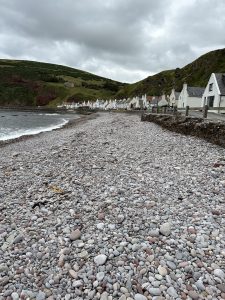
Pennan, with its beach of perfectly, or almost, round pebbles…
And then…oh I can’t even remember or begin to list how many lovely coastal towns we visited, with stunning views over the North Sea…Pennan, Cullen, Portsoy, Gardenstown and so many more.
Best name for a castle? Hehe, definitely Findlater Castle, near Cullen. FindLater…Gotta love it!!! 😎
And the beaches on the North Sea…wow, what can I say? Oh dear, I have to stop reminiscing now. Time for dinner.
I hope everyone is doing well! Take care! See you soon! Ciao!
Stefano likes to keep a note of anniversaries, birthdays, and other important events, but sometimes I would really prefer not to be reminded of certain dates. This morning, for example, as I was checking my phone calendar, which I share with Stefano, I saw that six years ago today we had Piccolo, our extraordinary and much beloved 14-year-old male cat, put to sleep.
It hit me…tears…grief…
No matter how much time goes by, it is still hard…
But no, I don’t want to remember the period around Piccolo’s death, or, even less, the terrible day he died, one of the worst in my life. I want to remember him when he was well, happy, with us (almost all his life).
Piccolo…how funny and smart and loving he was (I have written a bunch of posts about him, incidentally). And sometimes I look at what one of our cats is doing and think “Hey, Piccolo used to do that,” and it really makes me smile. There is a bit of Piccolo in all of them, especially Pandora…
My Piccolo
Here is a photo of him…not a great one, but it will have to do…taken in the days before I got a decent cellphone, methinks…
 Just about an hour ago I read some interesting news on the curcumin front, positive news…unfortunately, I don’t have time to write about it now. But I will be looking into it, you can be sure of that…
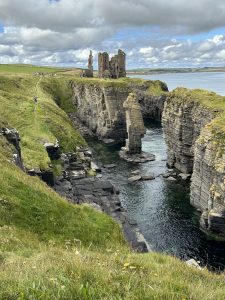 My first mention definitely goes to Castle Sinclair Girnigoe, see photo on right, which actually consists of the ruins of two castles, one from the 15th century, the other from the 17th. It’s located on a rocky promontory and has small sea stacks all around it, as you can see (the ruins are in the back of the photo). Spectacular.