
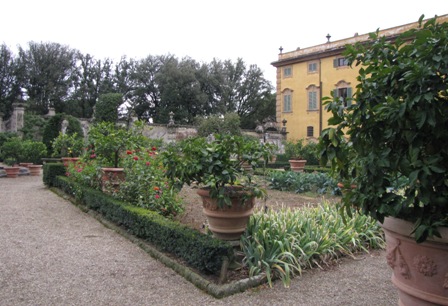
The multiple myeloma patient and family seminar in Florence. Part 1


IMG_3587There weren’t very many people at the seminar yesterday, but that was a good thing, as Susie Novis, president of the International Myeloma Foundation, pointed out, in the sense that we had more time to ask questions and didn’t have to “compete” with 1000 other patients/family members.

Dr. Durie is a first-rate public speaker, in my opinion. His presentation, titled “Myeloma 101,” was clear and easy to follow. I took copious notes, out of which I will choose what were the most significant topics, in my opinion. Today’s post turned out to be way too long, so I will publish Part 2 tomorrow.

I was particularly intrigued by something that came up while Dr. Durie was listing a few of the tests that can help determine if myeloma has become active or not. He mentioned the importance of monitoring our serum iron and ferritin (=iron stores) levels, which came as news to me. He explained that, when myeloma becomes active, our bone marrow stops producing red cells, which is why our haemoglobin decreases and we risk becoming anaemic (after all, “Anaemia” is the “A” in the “CRAB” acronym). At that point, he said, the unused iron begins accumulating in the body. So a sign of active disease could be an increase in iron and ferritin levels. Well, knock me down with a cat hair…I will never again whine about having low serum iron and ferritin (actually, my most recent tests show that they are both at the lower end of the normal range…which is fine with me now!)!

He also showed us a slide on Michael Pollan’s precepts (see: http://tinyurl.com/ydmuaem), including these:

  1. Don’t eat anything your grandmother wouldn’t recognize
  2. Shop at the edge of the supermarket
  3. Eat slowly

Of course, number 1 refers to processed foods and whatnot. I wonder what my grandmothers would have said about, er, homemade curry dishes and turmeric bread…

Let’s see, breezing through my notes…Dr. Durie offered the following sensible advice for multiple myeloma patients:

Spiritual health –> Find your own way –> Achieve balance –> Live in the moment –> Create new plans –> Expect good results!

He then showed a slide on Randy Pausch, a well-known computer scientist who died of pancreatic cancer in July 2008. On September 5th 2008, I wrote a post about Prof. Pausch, see http://tinyurl.com/yfg3t3l If you haven’t seen his “Last Lecture, well, go have a look when you have a second.

During the question section, replying to a question about the H1N1 vaccine, Dr. Durie said that “most MM patients are not at high risk,” adding that older patients have some immunity to H1N1 because the same strain showed up in the 1918 flu pandemic. Those who instead are in the high risk category are young people and pregnant women. So basically, the H1N1 virus is, and I quote, “not such a big issue for MM patients.” Dr. Durie did recommend the following:

1. “have the regular flu vaccine, because we know it’s safe and can boost overall immunity.”

2. Aredia/Zometa turn out to be a very good treatment for the flu. An Asian study, he told us, recently showed that Aredia kills the H1N1 virus. He joked that as soon as we hear of a flu outbreak in our neighbourhood we should rush over to the hospital to have an Aredia infusion. I chuckled together with everyone else, of course, but I would instead double my intake of vitamin D3…! Oh bother, that reminds me, I should have brought up the issue of vitamin D and the Health Canada study on vit D and H1N1…phooey, I forgot. Oh well…

Another point: according to Dr. Durie, the H1N1 vaccine is not as effective in MM patients as in healthy folks. He did say that it might be a good idea for our caregivers to have the vaccination, though.

Well, what Dr. Durie told us yesterday made it easier for me to make a final decision on the “to vaccinate or not to vaccinate?” topic. My GP has already put me and Stefano on his H1N1 vaccine list, but I will ask him to remove our names. Stefano and I are both scheduled to have the usual, yearly flu shot, oh, and by the way, we always get the no-mercury vaccine (please make sure that you do, too! Our vaccines should be the thimerosal-free ones). But no, we won’t have the H1N1 vaccine. We will try to avoid crowds as much as possible (ah, you should see me zoooom through the supermarket these days…as fast as a puffin with a beakful of sand eels, whizzzzzing through the air…and if I hear someone cough in the immediate vicinity, I am out of there faster than you can say “ashwagandha”!) and take the usual precautions that I have written about so many times.

Okay, that’s plenty for today. The rest…tomorrow!

Startled children and too many foreigners…

A blog reader/friend (thanks!) sent me this amusing list today. Some of the items seem too good to be true but, regardless, they gave me a good chuckle, and that is what is important. So…enjoy!!!

This was sent around from Thomas Cook Holidays – listing some of the guests’ complaints:

· “I think it should be explained in the brochure that the local store does not sell proper biscuits like custard creams or ginger nuts.”

· “It’s lazy of the local shopkeepers to close in the afternoons. I often needed to buy things during ‘siesta’ time – this should be banned.”

· “On my holiday to Goa in India , I was disgusted to find that almost every restaurant served curry. I don’t like spicy food at all.”

· “We booked an excursion to a water park but no-one told us we had to bring our swimming costumes and towels.”

· “The beach was too sandy.”

· “We found the sand was not like the sand in the brochure. Your brochure shows the sand as yellow but it was white.”

· A guest at a Novotel in Australia complained his soup was too thick and strong. He was inadvertently slurping the gravy at the time.

· “Topless sunbathing on the beach should be banned. The holiday was ruined as my husband spent all day looking at other women.”

· “We bought ‘Ray-Ban’ sunglasses for 5 Euros (£3.50) from a street trader, only to find out they were fake.”

· “No-one told us there would be fish in the sea. The children were startled.”

· “It took us nine hours to fly home from Jamaica to England; it only took the Americans three hours to get home.”

· “I compared the size of our one-bedroom apartment to our friends’ three-bedroom apartment and ours was significantly smaller.”

· “The brochure stated: ‘No hairdressers at the accommodation’. We’re trainee hairdressers – will it be OK staying here?”

· “There are too many Spanish people. The receptionist speaks Spanish. The food is Spanish. Too many foreigners.”

· “We had to queue outside with no air conditioning.”

· “It is your duty as a tour operator to advise us of noisy or unruly guests before we travel.”

· “I was bitten by a mosquito – no-one said they could bite.”

· “My fiancé and I booked a twin-bedded room but we were placed in a double-bedded room. We now hold you responsible for the fact that I find myself pregnant. This would not have happened if you had put us in the room that we booked.”

Sea cucumbers and smoldering myeloma

Just by chance, I don’t even remember how!, I came across an interesting bit of information. In St. Vincent’s Comprehensive Cancer Center in New York City, there appears to be a Phase II trial testing a sea cucumber extract on “untreated asymptomatic myeloma patients.” Here is the link: http://tinyurl.com/ykq8kxt [Update, Dec 2010: okay, this link only leads back to the St. Vincent website, so try this link instead: http://goo.gl/JMJiQ]

I found a lot of information on sea cucumbers online, but it is not reliable since it comes from websites that sell this stuff. But I also found a write-up on the Sloan-Kettering website: http://tinyurl.com/ykmfb5u Here we can read that In vitro studies have shown that the saponins and fatty acids present in Sea cucumber are responsible for its anti-angiogenic, anti-tumor, antiproliferative, and antiviral properties. Hmmm…

This may lead to nothing in the end…but what a peculiar thing, no?

Rattling the clone’s cage…

Yesterday I discussed my results with Sherlock who expressed caution based on the fact that I had changed hospital labs (see yesterday’s post). Now, I am all in favour of being cautious. However, last night Stefano reminded me that Sherlock (who btw hasn’t been testing anything new but has been taking only curcumin and fish oil) went to the same hospital for her most recent tests, and her results were stationary compared to her previous Careggi tests. Those are good results, of course!

But let’s go over Stefano’s considerations:

1. Sherlock’s test results haven’t changed since last spring.

2. Mine have.

3. Our results were processed by the same hospital lab, i.e. the new one (“new” to us, of course!), less than a week apart.

4. Therefore, the huge drop in my total IgG as well as a not-so-dramatic-but-still-relevant drop in m-spike seem to indicate that something has definitely changed in my case.

5. Whether or not the changes in my numbers can be ascribed to ashwagandha is impossible to say. But the evidence does seem to point in that direction.

One thing is crystal clear: I will have to re-test ashwagandha again, probably after my saw palmetto experiment. Sherlock suggested that I drop the saw palmetto and test ashwagandha now, but I think I will wait…mainly because of the menstruation reoccurrence (see my October 5th post). I didn’t care for that one bit. I would like to see if I still continue to get my period, now that I have stopped taking ashwagandha.

On to a related subject. Since I published my post, in addition to the public comments left on my blog, many of you have written private congratulatory notes to me (thank you, everyone!). One of these notes came from a long-time blog reader and MGUS friend, who began taking ashwagandha last week. Her writing is always witty and engaging, as we can tell by the end of her message, which really tickled my funny bone:

“Your latest results have made me feel really good about my choice to use ashwagandha to rattle the cage of my clone.”

Rattling the cage of the clone…I love this image! Well, let’s keep rattling away…without making “the clone” too angry, though!!!

ASHWAGANDHAAA!!!

What I am about to write may sound almost too amazing to be true, and perhaps it is. When I got home from work today, I found my early October blood test results lying in my mailbox. Surpriiiiise!!! According to the schedule, you see, my results weren’t supposed to be mailed off until October 21st!!! My knees began shaking so much that I almost didn’t make it to the front door (oh well, okay, that’s actually not true; I just thought it would be neat to introduce some drama…teehee).

Well, I confess, I am ecstatic…even though, as prudent Sherlock reminded me, these results must be examined with a certain degree of caution because they were not processed at Careggi university hospital but at another one of Florence’s main hospitals (my reason for switching hospital labs can be found in my October 5th post, btw). A very good hospital, mind you. But that also means that a lot of my numbers now have different reference ranges. In some cases, though, thank goodness, the old and new ranges were identical, which made my job much easier. Okay, that said, here are a few values:

The following gives me a good reason to celebrate: my total IgG has gone down from a whopping 39,9 (June 2009 tests) to 29,7 g/L. No kidding. A more than 30 % drop! Incidentally, the reference range happens to be the same for both hospitals, except one is in g/L, the other in mg/dL, which simply means that I went from 3990 to 2970 (mg/dL, i.e.).

Trallallero trallallà!!!…brief dance of joy.

Now, my M-spike (or rather, what Sherlock and I believe to be the number corresponding to the M-spike, though this will have to be confirmed by our respective hematologists) has gone down from 2,68 to 2,41. That would also be a very good result: a drop of more than 10 %.

As for the rest of my results, taking into account the above-mentioned range differences, it would seem that…

1. my platelet count has increased to 305 (new range: 150-400) from June’s 244 (Careggi range: 140-440).

2. my serum calcium and creatinine are stable…still within the normal range. And my IgA and IgM also remain unchanged. Phew!

3. my C-reactive protein, which till now has been a maddeningly “less than” amount, is finally an ACTUAL NUMBER: 0,3 mg/L (normal range: <0,5). Good to know.

4. my monoclonal component has gone down from 28,3 % to 25,7 %. Another slide in the right direction!

5. my total protein seems to be stable, still slightly above the normal range, but, due to the difference in ranges, I will have to do a few calculations later on, with Stefano’s help. It looks about the same to me, though.

6. I am almost positive that my hemoglobin and hematocrit have increased. Hard to tell because of the, yes I am sure you have guessed!, slight range difference. My hematocrit has certainly gone up…Oh, and so has my white cell count.

There are a few bad things (can’t have everything, after all):

— my B2M appears to have gone up a bit. But yes, as you may have guessed (again!), the new reference range is lower than the Careggi one. Even so, my B2M is only slightly above the normal range. I am not concerned.

—  my vitamin D has decreased compared to June, in spite of my vitamin D supplementation over the summer, so I will have to do something quickly about that…this is a matter of some concern to me, now that the flu season has definitely struck Florence. This number is still within the normal range, but it is located on the lower end, which I know is not good at all!

Well, I am definitely in the mood to make merry this evening, as is Stefano, who slyly asked me over the phone if I wanted to celebrate this happy occasion with tripe and onions for dinner…yeah, right!!! He knows that I would rather eat my own shoelaces! Silly boy… 🙂

Saw palmetto and multiple myeloma: the full study

A blog reader, an 8-year survivor of multiple myeloma, recently told me that he began taking curcumin last summer, after reading my post on the curcumin-bortezomib study. This combination, he believes, produced much better results than the Velcade alone would have. Based on my July 23rd 2009 post on saw palmetto, or Serenoa repens, he began taking that as well. He isn’t sure that it helped, but he writes that his m-spike, which had seemed stuck at 0.3, subsequently went down to 0.1. Interesting.

Well, that reminded me that I hadn’t yet posted about the full saw palmetto study (abstract: http://tinyurl.com/mxrysb), which I purchased online a few days ago, since saw palmetto happens to be next in line on my to-be-tested list of supplements…all depends on the content of this study. So let’s stick our heads right into the full study.

After the usual well-known dire statistics about myeloma (skipskipskippety!), the study mentions STATs. These signal transducers have an important role in myeloma (which reminds me, I have an almost-finished draft on STAT 3…need to find the time to finish it, sigh). Just to mention one of its actions, STAT 3 stimulates the growth of our malignant cells. Oh, and another thing: it protects them from apoptosis.

Then we find a list of previous studies on the effects of saw palmetto on prostate cancer and breast cancer. By the way, I am going to use “saw palmetto” and not “Serenoa repens” in this post, since I rather like the image of a “saw” being “palmettoed” through each myeloma cell…and no, “to palmetto” is not a reeeal verb…just an invented image of my twisted brain, hehe…

In this study, the researchers found that Serenoa repens inhibited the proliferation of a variety of human leukemia cells including U266 and RPMI 8226 multiple myeloma cells. We also found that Serenoa repens inhibited basal level of phosphorylated form of STAT 3 and Interleukin-6 (IL-6) induced level of phosphorylated form of STAT 3 in U266 cells suggesting that Serenoa repens may induce growth arrest and apoptosis of human multiple myeloma cells through inactivation of STAT 3 signaling. Serenoa repens might be useful for treatment of individuals with human multiple myeloma. By the way, the cells lines used in the study were human acute myelogenous leukemia and acute lymphoblastic T-cell cells (HL-60, NB4 and Jurket) and multiple myeloma cells (U266 and RPMI 8226).

Results: in addition to stopping the growth of the myeloma cells, saw palmetto also slaughtered them without pity, in a dose and time-dependent manner. Interesting finding: U266 cells exposed to saw palmetto had 60% lower levels of Mcl-1 compared to control cells (Mcl-1 is an evil member of the Bcl family; in a nutshell, it helps myeloma cells survive). Let’s see, without boring you with too many details, here is the gist (my emphasis): These results indicate that Serenoa repens induces growth arrest and apoptosis of human MM Cells. Yaaaay!

The researchers also showed that saw palmetto inhibits the proliferation and determines the death of human acute leukemia cells. Also very good.

And they discovered that saw palmetto reduces the expression of phosphorylated form of STAT 3 by 80 %. Not bad, not bad at all. It also blocked the IL-6-induced phosphorylation of STAT 3 by 85.0%. This leads the researchers to state the following: These data indicate that Serenoa repens may reduce the expression of phosphorylation of STAT 3 or ERK mediated by IL-6 in MM cells. Well, even if you don’t understand every single detail of the above, no matter: all we need to know is that the above-mentioned reduction is a very very GOOD thing.

The researchers also examined the interaction of saw palmetto with a chemo drug used in the treatment of myeloma and other types of cancer: docetaxel. I was not surprised to read that the anti-myeloma activity of this drug was enhanced by saw palmetto through inhibition of STAT 3 signaling.

Discussion: In this study, we found for the first time that Serenoa repens down-regulated the phosphorylated form of STAT 3 in U266 cells. Also, IL-6-induced the level of phosphorylated form of STAT 3 and ERK were reduced after Serenoa repens treatment in U266 cells. Again, it doesn’t matter if we don’t understand what the process of phosphorylation entails. The point is: this is very good news for us.

This leads us straight to the researchers’ final statement: In summary, we found that Serenoa repens was an important phytotherapeutic drug against multiple myeloma cells through inhibition of STAT 3 signaling. Serenoa repens may be useful as an adjunctive therapeutic agent for treatment of individuals with multiple myeloma and other types of cancer in which STAT 3 signaling is activated.

Okay, I am convinced. I am going to begin taking saw palmetto today. Just to be cautious, though, I will take it at a different time of day than my curcumin/fish oil. Let the experiment begin! Oh, I see it’s time to feed my cats…I had been wondering why they were walking across the desk, waving their tails in my face…I had better stop here. Ciao!

Upcoming seminar for multiple myeloma patients/families/caregivers in Florence

A seminar for myeloma patients and their families/caregivers will be held here in Florence on Wednesday, October 21st, at the 15th century Villa La Pietra, now owned by NYU. I received this bit of news just this morning. I plan to attend, of course, since (luckily!) I don’t work on the 21st. This will be my first myeloma patient seminar. Ever. I can’t wait. The main speaker, by the way, will be Dr. Brian Durie. Important: you have to sign up in order to attend (for free, eh). See details below.

If any of you plan to be there, please please please get in touch with me via the Contact form (or, if you have my e-mail address, drop me a line). I would love to meet you!

Here follows the info that I received from the seminar organizer, Vittorio Schirinzi:

Come promesso, sono a darvi il programma del prossimo 21 ottobre per il II Seminario Pazienti e Famiglie che questo anno si terrà a Firenze. Sede del Seminario è Villa “La Pietra” sita sulla Via Bolognese al civico 120.

Come lo scorso anno, parteciperà al Seminario il Dr. Brian Durie che alcuni di voi hanno avuto il piacere di conoscere. Il Dr. Durie è uno dei massimi esperti mondiali sul mieloma multiplo e sarà disponibile a rispondere a tutti i quesiti che vorrete sottoporre. La presentazione del Dr. Durie e le domande e risposte saranno interamente tradotte da un interprete professionista per coloro che non parlano inglese ed al fine di facilitare al massimo la comprensione.

Vi invito a partecipare a questo evento poiché è la migliore occasione per poter risolvere alcuni vostri dubbi e avere delle risposte concrete ai vostri quesiti sul mieloma multiplo. Vi ricordo che la partecipazione è totalmente gratuita confermando la vostra presenza via e-mail all’indirizzo mielomahelp@gmail.com  

============================================================

 Programma Seminario Pazienti Mieloma Multiplo. Villa “La Pietra”, Firenze 21 ottobre 2009.

Ore 15:00 Apertura Seminario

Susie Novis, Presidente International Myeloma Foundation e Vittorio Schirinzi Presidente Associazione Schirinzi A. Mario

Ore 15:15 “Che cosa è il mieloma multiplo”

Dr. Brian Durie, Cedars Sinai Hospital, Los Angeles

Ore 15:45 “Attività Mieloma Multiplo nell’Area Fiorentina e Novità nella terapia del Mieloma Multiplo”

Dott.ssa Chiara Nozzoli, Reparto di Ematologia Ospedale Careggi, Firenze

Ore 16:15 La parola ai pazienti: domande ai relatori 1° parte

16:45 Coffee Break

Ore 17:15 La parola ai pazienti: domande ai relatori 2° parte

Ore 18:00 Chiusura seminario

Greg Brozeit, International Myeloma Foundation e Vittorio Schirinzi, Associazione Schirinzi A. Mario

============================================================

Se avete intenzione/la possibilità di partecipare a questo seminario, vi mettereste in contatto con me? Se non avete il mio indirizzo e-mail, mi potreste lasciare un commento su questo post oppure cliccare su “Contact” (qua a destra, sotto “Pages”). Mi farebbe molto, ma davvero molto!, piacere incontrarvi! A proposito, per ulteriori informazioni (tipo, come arrivare a Villa La Pietra oppure la biografia del Dr. Durie), date un’occhiata al sito di Mieloma Help: http://mielomahelp.blogspot.com/ Ci vediamo a Villa La Pietra, spero!

Peekaboo in a bag…

I am reading, or trying to read!, the full dendritic cell study (see my October 6th post) and also recovering from some sort of minor “bug,” that held me captive for about 24 hours this week. No big deal, I am fully recovered now…in fact, I went back to work today and feel 100% fine…but I am being cautious. I found out just this morning, you see, that one of my students, who has been absent from work for two weeks with the flu (nobody knew if it was the H1N1 virus), has now come down with bronchial pneumonia, poor sweetie. As a consequence, antibacterial hand sanitizer pumps have been put in all the company bathrooms…something that has never been done before. Wise move, I say!

This is a photo that I took last night of PeekabooIMG_3351, our youngest kitty, playing inside a paper shopping bag on my parents’ bed. You will notice that the bag’s handles have been cut. There is a good reason for that.

Once, as a kitten, our male cat, Piccolo, got his head stuck inside the handle of a plastic shopping bag…and he (understandably!) completely freaked out. He began flying up and down the stairs with the bag dragging after him (he could easily have choked!), with both of us scampering madly after him, trying to set him free, which Stefano managed to do in the end. Luckily, apart from his getting a huge fright (he peed all over the stairs, poor dear) AND giving Stefano and me the fright of our lives, no real harm was done. But we learned a valuable lesson: if you let your pet play with a bag, always make sure that the handles are cut. And never, under any circumstances, leave a bag of any sort lying around the house.

Well, I am going to stick my head inside that dendritic cell study again…I must have been a huge masochist in a previous life…yes indeedie!

P.S. My blog banner photo was taken by Stefano at the Oasi di Focognano, a WWF oasis located right outside Florence, where we went last weekend to photograph migrating birds. In addition to dozens of great and small white egrets and grey herons (like the one in the banner), we saw a stork, too. Fabulous!

Corrupt immune system cells

A myeloma list friend (thanks!) posted about a Science Daily article discussing a recent discovery that may be of fundamental importance for future myeloma research. See: http://tinyurl.com/ye6d5bu

Bad news: our immune system cells (=plasmacytoid dendritic cells, specifically) can be tricked into protecting the blasted myeloma cells, thus promoting their growth and general wellbeing…

Good news: this process may be reversible.

Well, well, interesting…go have a look…

Astonishing ashwagandha…

Stefano and I went to have our blood tests on Saturday. His were merely part of a routine check-up…mine were the usual myeloma ones, with a few extra tests thrown in, as you will see.

Through Sherlock (I thanked her privately but this deserves a huge public note of thanks, grazie, carissima!), I discovered that you can call and make an appointment to have your tests done at a hospital that is about a ten-minute drive from our house. If you make an appointment for 8 AM, you are done by 8:10 AM, more or less. Wow. You have no idea how thrilling this is. My life is about to change…no more endless hours spent in the vast waiting halls of Careggi university hospital, which, at this time of year, is very likely packed to the brim with flu-infested coughing and sneezing people. Yaaay! But I digress…

The point of today’s post. For three weeks in September I tested ashwagandha, or Withania somnifera, a medicinal plant used as far back as ancient Egypt (!) and, in more recent years, found to have anti-myeloma activities (see my page on “Ashwagandha” or my June 15 2007 post). I took it separately from curcumin, just to be cautious. And I took the recommended dose on the bottle. No more, no less.

So these were my ashwagandha tests. I really hope that even the low dose I took had a positive effect on my MM markers. Fingers tightly crossed!

But I wanted to mention a couple of rather odd things that happened during the ashwagandha period…not necessarily bad things, but certainly out of the ordinary. As follows.

1.  I felt more tired than usual. I mean, REALLY TIRED. Whenever possible (not at work, i.e.!), I would fall into a deep sleep, especially after lunch…and it would take a colossal effort on my part to wake up in mid or late afternoon. This didn’t make any sense. 

Ashwagandha, you see, is supposed to give you energy. It translates into something like “the vitality of a horse.” A horse?! Hah. In my case, the translation should be: “the vitality of a sloth.”

I went online and read somewhere (a forum, I think) that ashwagandha can make some folks tired. Okay, no problem. Mental note: next time (for I am sure I will try ashwagandha again, even if my tests don’t turn out as fabbbbulous as I hope), take it before going to sleep.

2. Now for a more, er…private topic. Not an easy one for prudish little moi. But for the sake of science, I will set aside my modesty for just a second. Here goes.

I stopped having my menstrual period quite a few months ago: in January 2009, to be precise. After ascertaining that I was not pregnant (a relief for many reasons, mainly my condition of having SMM, but also my age, 47 at the time; I am now 48), I simply decided that I had hit menopause. No big deal. You see, I have always belonged to the “hate-my-period-with-a-passion” category of women, so “losing” my period was almost cause for a champagne/chocolate truffle celebration. No, I never experienced unbearably painful menstrual cramps, I never became moody or irritable (as far as I know…), nothing like that…I just have always hated getting my period. Period.

I made an appointment to see a gynaecologist who checked me out thoroughly last spring, including an ultrasound. Tutto bene, she told me (=everything is just dandy). She agreed that I might have entered menopause but didn’t exclude that I might have a period at some indefinite point in the future. She prescribed specific menopause tests, which I had on Saturday, in fact.

Well…about two and a half weeks after beginning ashwagandha, aunt Flo (=euphemism!) popped in to visit me for about a week. An unwelcome visit, to say the least. Uffa!

I remembered reading that ashwagandha was used as some sort of sexual tonic in Ayurvedic medicine. I had a look online, where I found that ashwagandha is still traditionally used to treat loss of libido in men and, tadaaa!, sterility in women. Does that imply that it has the ability to start up a menstrual period again? No idea.

In spite of my uncertainty about the ashwagandha-period link, I decided to publish this post because I found something that might be of interest to those taking doxorubicin, which, at high doses, is known to damage the heart. Tests carried out on rats show that ashwagandha may play a role in the protection against cardiotoxicity and thus might be a useful adjuvant therapy where doxorubicin is the cancer-treating drug, see: http://tinyurl.com/ydw3k7k 

In fact, ashwagandha has some remarkable properties, more than I had realized, to be honest…just go to PubMed (http://www.pubmedcentral.nih.gov/) and type in “ashwagandha” together with whatever you want to look up, e.g. “diabetes” “stress” “anxiety” “Parkinson’s disease” “cystic fibrosis” “arthritis” or “glioblastoma.” Oh, and osteoporosis, see this 2006 study, e.g.: http://tinyurl.com/yc8o946

And finally, here is a link to read an extremely interesting 2006 review of ashwagandha, including references to, and details of!, scientific studies: http://tinyurl.com/yeaggrc (those doing radiotherapy or chemotherapy, e.g. cyclophosphamide and paclitaxel, should have a look at the “Chemotherapy Interactions” section). Good stuff!