Worrying about low ferritin levels…no more!

I have always been a bit apprehensive about my low levels of ferritin (= a protein that binds to and stores iron, which the body can use when needed). At times, my ferritin has even fallen below the normal reference range…this happened in last May, in fact. Well, I am happy to say that my ferritin is now within the normal range, albeit on the low end. And that is where I hope it will stay…

You see, day before yesterday, after reading a study (full study: http://tinyurl.com/yco8rsq) on the ferritin-myeloma connection, I threw all of my ferritin worries out the window…Incidentally, I would like to express my gratitude to the blog reader who sent me the link to this study, which apparently is the first to examine the possible impact of serum ferritin on the survival of myeloma patients.

The authors measured the serum ferritin levels in newly diagnosed MM patients to determine whether the level is correlated with outcome and is an independent predictor of survival in patients with MM. They examined 89 myeloma patients, all of whom had been following different chemotherapy regimens (see the study for details). The average follow-up was two years (up to six years).

Of these patients, 39 had high ferritin levels, 50 had normal levels. Compared to the normal ferritin group, the high ferritin patients had lower albumin and higher B2M (=Beta-2 microglobulin) and CRP (=C-reactive protein) = not good news, as we know by now. Calcium, creatinine and haemoglobin were the same in both groups, though. Longer survival was associated with higher albumin and haemoglobin levels, and with normal B2M, LDH (=lactate dehydrogenase…an increase of this marker may signal myeloma progression) and CRP. Check out Figure 2, in particular. Impressive.

The authors state that high ferritin was an independent predictor of mortality in patients with multiple myeloma…in this particular study, of course…

Okay, let’s have a look at the Discussion part: The serum ferritin level reflects acute phase reactions and is usually associated with iron storage. Iron overload increases the susceptibility to organ damage and the risk for infection. Recent studies have shown that serum ferritin is a surrogate of iron overload and is an important predictor of survival in transplantation patients. A quick search of PubMed led me to this 2010 study on an ALL patient who suffered from iron overload and liver toxicity after an allogeneic transplant: http://tinyurl.com/yfnl9n5 See also this 2007 Dana Farber study: http://tinyurl.com/yj7fsrx And this 2006 study shows that myeloma patients undergoing autologous stem cell transplants are more likely to suffer from severe infections if their pre-transplant bone marrow iron stores or BMIS are high(serum ferritin is a reliable marker of BMIS, I read): http://tinyurl.com/yhhrukh Iron overload is a problem also for patients requiring chronic transfusions, see for example this 2010 study: http://tinyurl.com/yg2npcz

Well, after reading all these abstracts, the fact that the high ferritin patients had a worse outcome than the normal ferritin ones should not come as a shock: the patients in the elevated ferritin level group had more adverse prognostic factors at baseline and a poorer clinical outcome compared with patients in the normal ferritin group. Furthermore, the serum ferritin levels at the time of diagnosis were correlated with survival in newly diagnosed MM patients. So, the lower, the better…

The authors themselves point out that the ferritin-myeloma study has some limitations, namely the small number of myeloma patients, the lack of FISH testing and the fact that the patients followed different chemotherapy regimens. That is why their conclusion uses the conditional tense: the serum ferritin level may be associated with OS in patients with newly diagnosed MM. Further investigation is warranted to determine whether serum ferritin is an independent prognostic marker and a measure of disease activity. (“OS” means “overall survival.”)

My own conclusion. Yes, the study was a very small one and yes, the patients involved were taking different types of chemo (etc.)…but we know enough now about the iron overload link to cancer (take another look also at my July 19 2008 post titled “Double-edged sword”) for this study to make sense on a variety of levels. And that is why I have decided not to worry about my low ferritin levels anymore… 

For cat and dog lovers…

On December 5th 2009 I posted a link to one of the cutest videos I have ever watched (its parody was quite amusing, too): http://tinyurl.com/yacyao2. My cousin, grazie!, recently sent me another (Italian-made, it would seem) parody that made me laugh out loud: http://tinyurl.com/ycq3zmc By the way, I tried to get my own cats to do the surprised kitty thing…hah! They just looked at me as though I were crazy…no other reaction…sigh…

And a blog reader/myeloma list friend, thanks!, recently sent me this link…Dog lovers will enjoy this one: http://tinyurl.com/y8rj4zh Awwwww!!!

Grading side effects

At the end of the SMM abstract presented at ASH 2009 (see previous post), the authors write about a manageable and acceptable toxicity profile. I would like to take a closer look at this statement today. Let’s see. Many of these smoldering patients suffered from G3 adverse events…but what exactly does G3 mean?

Well, it just so happens that a fabulous blog reader (merci!) sent me a link to a grade toxicity chart that can help us understand what all these various levels (G1, G2, G3 and G4) mean: http://tinyurl.com/yfohksl

However, based on the way the ASH abstract is worded, I found it very difficult to figure out exactly how many patients experienced side effects. I am still not sure if I have counted them correctly, since there could be some overlap between the groups.

Well, let’s try to go through the abstract carefully: 

  • 7 patients experienced G3 side effects, such as G3 asthenia, which, incidentally, means that they were not able to work (=normal activity reduced by 50%)…
  • 5 patients had severe (=G3) dexamethasone or lenalidomide-related symptoms. Of these, 3 patients developed gastrointestinal bleeding, glaucoma and infections from dexamethasone, the other 2 had infections from lenalidomide (no details provided). Since these patients had different G3 symptoms from the above-mentioned 7 patients, I presume that they are not the same patients. No overlap. Presumably.
  • 4 patients had to reduce their dose of lenalidomide because of side effects such as fatigue, diarrhea and gastrointestinal bleeding. I don’t think this number includes the two patients who developed G3 infections (see previous point), since the infections experienced in this group do not appear to be so severe…Not super clear, though.
  • 2 patients left the study at their own request: they were probably among the above-mentioned G3 sufferers. Again, this is not clearly stated. But let’s say that that is the case…I won’t include them in my head count.

Boy, what a sloppy bit of writing. I am NOT impressed!

Anyway, trying to add all this up…it appears to me that the number of patients who suffered from a variety of side effects, some serious, some not so serious, is a whopping 16 (7+5+4). Hmmm, I don’t suppose anyone could help me figure this out? Or is it impossible, given the hazy details provided in the abstract? It is, most likely, the latter case…

Well, what is clear is that the side effects experienced by 16 patients or even 14 out of a total of 40 CANNOT be ignored. 

Manageable and acceptable…for whom???!!!

A high-risk SMM study presented at ASH 2009

Today a blog reader’s comment prompted me to finish editing this post, which I actually wrote a few weeks ago and then left buried in my ever-increasing pile of drafts, sigh.

Last month, a study, presented at the 2009 American Society of Hematology meeting (see: http://tinyurl.com/yz965fc), was brought to my attention…a study concerning high-risk smoldering patients, i.e., patients who are NOT in the stable “watch and wait” category. This is an important distinction since, according to a 2007 Mayo Clinic NEJM-published study (see my January 11 post: this is an interesting study that, however, examines a relatively small SMM population, so it should be taken with a rather large side dish of caution…), only a small percentage of SMM patients progress to active myeloma every year.

The 2009 ASH study authors declare right at the beginning that Several small studies have explored the value of early treatment with either conventional agents (melphalan/prednisone) or novel drugs (thalidomide, interleukin-1b), with no clear benefit. It should be noted that these trials didn’t focus on high-risk sMM.

Notice these words: No Clear Benefit.

And now let’s see how the authors define a “high-risk” smoldering population:

Criterion A: at least 10% plasma cells in the bone marrow.

Criterion B: an M-component of at least 3 g/dL.

If only one criterion is present, then, according to these authors, a patient must have other “aberrant factors” in order to be classified as “high risk” (see above-mentioned abstract for details). Well, that would have excluded me from participating in this study. Even though I probably still have a decent amount of myeloma cells in my bone marrow, my M-spike has never gone as high as 3 grams/dL, and all my, er, factors are far from…aberrant.

Not that I would ever have accepted to be part of this study, and I will give you a few good reasons why:

  1. The study lasted from October 2006 to June 2008…not long enough to reach any conclusions, in my opinion, especially given what follows…
  2. Some of the 40 “high risk” smolderers who were given lenalidomide (=Revlimid) and dexamethasone suffered from severe side effects, as we will see in a second…
  3. Complete remission or CR was achieved by only 11% of the 40 patients mentioned in the abstract (there was also a 5% of stringent CRs, see http://tinyurl.com/y8ty9vr for more details on this type of remission). Okay, that’s four people, more or less (don’t you just love percentages? 11% of 40: 4.4 people…eh??? I’d be curious to know which part of that 0.4 person was in remission…)…oh let’s be generous, let’s say even five people in complete remission. But let’s look at the other numbers mentioned in the abstract: five patients developed what are called “serious adverse events” or SAE = gastrointestinal bleeding, delirium and glaucoma, two of these SAE patients left the study, in fact…and two other patients left at their own request…no details given as to why. Let’s add this up (math is not my forte, as you know, so you might want to double-check): five patients were affected by severe side effects, two left the study for unknown reasons, and four others were having problems such as asthenia, diarrhea and gastrointestinal bleeding. Now, according to my calculations, that’s eleven people with problems…compare that to the four, perhaps five, who achieved CR…out of a total of only forty patients…I don’t think I need to comment here…
  4. The abstract concludes that these preliminary results show that in sMM patients at high-risk for progression to active MM, delayed treatment is associated with early progression (median time 17.5 months) with bone disease, while so far Len-dex has been able not only to prolong the TTP (without any progression so far) but also to induce CRs with a manageable and acceptable toxicity profile. How “acceptable” was the “toxicity profile” for the smoldering patients who came down with delirium, glaucoma, gastrointestinal bleeding and infections? Uhm, just wondering…of course…!
  5. Last but not least. Celgene (the makers of Revlimid) was deeply involved in this study. In the abstract, check out number 21 on the list of hospitals/centers AND also the “Disclosures” section (=bottom of the abstract). You will find a list of 23 names: six, including the main author, are “Celgene Honoraria” recipients; two are Celgene employees (what the haaay???), and one belongs to the Celgene Speakers Bureau. So, let’s see: 9 people out of 23 are closely connected to Celgene…interesting…

This heavy involvement on the part of a pharmaceutical company made me suspicious right off the bat…And the following scenario popped into my head: if you saw a TV ad on a recently developed pesticide, would you trust the safety data provided by the pesticide company’s own spokespeople…enough to begin spraying this pesticide all over your vegetable garden? No, I didn’t think so…nor would I.

My own considerations: how would these patients be doing now if they had been given only curcumin and perhaps some of the non-toxic anti-myeloma plant-derived substances that I and others have been testing? You won’t get delirium or infections or glaucoma from curcumin or ashwagandha…

I rest my case.

Love your wrinkles!

In December, a blog reader, thanks!, sent me a warning about hyaluronic acid and multiple myeloma. She sent me the link to this 2001 study, whose full text is available online: http://tinyurl.com/yhwcb5w.

First of all, what is hyaluronic acid, or HA? Well, it is a major component of our connective tissue, with a lubricating and cushioning function, mainly (from what I read). It is found mostly in our skin (>extracellular matrix) and joints and cartilage (>synovial fluid). As we get older, our levels of HA decline…our skin becomes dehydrated, joints get creaky etc. Well, there is a ton of online information on HA, so I will stop here…

…except to note that HA is used as a surgical aid in eye surgery, such as cataract, detached retina and glaucoma surgery, and also in arthritis treatments—the treatment of osteoarthritis of the knee, in particular. I even found a study in which HA was used to treat plaque-induced gingivitis…

I was most interested, though, to read that it is a common ingredient in many skin care products. This rang a bell: I remembered seeing Italian TV ads promoting products that supposedely can give you the skin of Emma Watson (of “Harry Potter” fame) and lips like Angelina Jolie’s. And yes, these products contain, drum roll!, acido ialuronico. Since I have never been interested in stuff like that, I paid no attention. But this morning, doing a bit of research for this post, I came across scores of websites promoting hyaluronic acid injections and creams and supplements. Vitacost, e.g., sells 76 HA-containing products—moisturizing creams, hand&body lotions, “healthy joint” or “healthy skin” supplements…gee whiz…mind-boggling.

Okay, enough. Let’s have a quick look at the above-mentioned study. I was particularly interested in the first experiment described in the Results section: three different myeloma cell lines were “starved” of IL-6, which, as we know, is a crucial myeloma growth factor. Then, when the cells began dying left and right, IL-6 was added to the mix. The cells stopped dying, of course.

Then HA was added as well, and the myeloma cells began to thrive again, even in the absence of IL-6: The addition of HA significantly reduced the percentage of apoptotic cells on the three cell lines tested.

You don’t have to read the whole study, which is very technical and detailed. If you have a bit of time, though, do have a look at the Discussion part, which highlights how myeloma cells rely on the bone marrow microenvironment for their survival. The penultimate paragraph (“Further investigations are needed…” etc.) is of particular interest, since it provides an explanation (a partial one) as to why myeloma cells accumulate in the bone marrow. Interesting.

Another interesting excerpt: […] an abnormally low or high concentration of HA in the serum of patients with multiple myeloma is associated with a significantly shorter median survival than those with an intermediate HA concentration. Did you notice that it seems to be bad to have both “low” and “high” levels of HA? Eh. [My next project: find out if and how our HA levels can be measured…]

In essence, according to the above-mentioned study, HA is a survival and proliferation factor for human myeloma cells.

Well, if that isn’t a good reason to be happy with, and proud of!, our wrinkles, I don’t know what is! Throw those creams and supplements straight into the rubbish bin or give them to someone who doesn’t have myeloma or any other type of cancer…

P.S. A couple of more recent studies. This 2008 study (http://tinyurl.com/yjbcxmd) describes how HA is implicated in the resistance of myeloma cells to dexamethasone (not a good thing for myeloma patients taking Dex!). And this 2005 study provides more proof of HA involvement in drug resistance (in addition to myeloma cell survival): http://tinyurl.com/yfbxotu

Academia translated into plain English

As you know, I read a ton of scientific/medical/etc. studies on all sorts of topics, mostly related to myeloma, of course. And I am frequently puzzled by sentences that make no sense (to me). That is why I was very much amused yesterday when I found and read the following list of commonly utilized research phrases and their translation into plain English (see http://tinyurl.com/ydm5ll3 for more on this topic)…:

  • “It has long been known” . . . I didn’t look up the original reference.
  • “A definite trend is evident” . . . These data are practically meaningless.
  • “While it has not been possible to provide definite answers to the questions” . . . An unsuccessful experiment but I still hope to get it published.
  • “Three of the samples were chosen for detailed study” . . . The other results didn’t make any sense.
  • “Typical results are shown” . . . This is the prettiest graph.
  • “These results will be in a subsequent report” . . . I might get around to this sometime, if pushed/funded.
  • “In my experience” . . . Once.
  • “In case after case” . . . Twice.
  • “In a series of cases” . . . Thrice.
  • “It is believed that” . . . I think.
  • “It is generally believed that” . . . A couple of others think so, too.
  • “Correct within an order of magnitude” . . . Wrong. Wrong. Wrong.
  • “According to statistical analysis” . . . Rumor has it.
  • “A statistically oriented projection of the significance of these findings” . . . A really wild guess.
  • “A careful analysis of obtainable data” . . . Three pages of notes were obliterated when I knocked over a beer glass.
  • “It is clear that much additional work will be required before a complete understanding of this phenomenon occurs” . . . I don’t understand it, and I never will.
  • “After additional study by my colleagues” . . . They don’t understand it either.
  • “A highly significant area for exploratory study” . . . A totally useless topic selected by my committee.
  • “It is hoped that this study will stimulate further investigation in this field” . . . I am pleased to feed you this B.S., and hope you will give me more funding.
  • Yoga reduces levels of IL-6

    A new study (see: http://tinyurl.com/ydambjq) has showed that women who regularly practice yoga have reduced levels of the cytokine IL-6, which, as we know, is a major myeloma growth factor and has also been implicated in heart disease, stroke, type-2 diabetes, arthritis and a host of other age-related debilitating diseases. Well, well, this is very interesting. Please go have a look…

    Okay, that’s it!, this Science Daily article has inspired me to get off the computer and go do some qigong. The research I am doing for a bunch of different posts can wait…Ciao!

    Myeloma, papayas and papain

    A blog reader, thank you!, sent me a link to a Myeloma Beacon article (see: http://tinyurl.com/y86k9py) on papain, an enzyme contained in papaya fruit trees, which breaks down proteins. One such protein, called fibrin, makes up the protective layer of cancer cells. Papain degrades fibrin and damages this protective layer, making the cells more susceptible to immune response or chemotherapy. The compound also hinders tumor growth and prevents it from spreading to other parts of the body.

    Please go read the rest of the story. Interesting…

    My only experience with papaya was dreadful, to be honest…but makes for an amusing tale, so here goes. A few years ago, when I was experimenting a lot with veggie and fruit juices (using my fabulous Greenstar juicer), I bought a couple of organic papayas. Now, I had read online that it was best not to juice the seeds because of their extreme bitterness, but hah, Margaret knows best!, so I washed, cut up and shoved everything down the juicer shoot, figuring that the sweetness of an apple would lessen the bitter, er…impact. Well, it didn’t: my lips puckered, my face puckered, even my hair puckered…haven’t bought a papaya since…but after reading this article, I will!

    This time, though, I will remove the gazillion and a half seeds contained in each fruit…

    P.S. There is a list of the most recent blog reader comments at the bottom of my Page column (scroll down, look on the right). This is handy if, like me, you like to read comments even on older posts, which brings me to the point: if anybody has any experience with MRIs and gadolinium, please click on and answer Francesco’s comment (or see my December 13 2009 gadolinium post). Thank you!

    Cat calls…

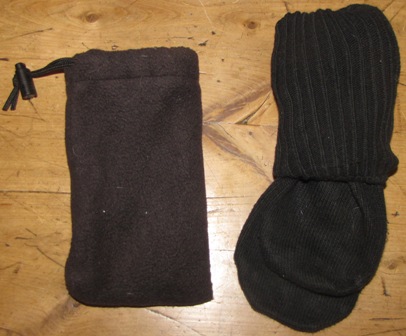
    Premise 1. Stefano stores his palm pilot (a sort of fancy flat cell phone with all sorts of neat features) inside a nice black cloth bag with a drawstring (see photo 2).

    IMG_4688Premise 2. Peekaboo loves socks (photo 1)…so much so that I always have to be careful to put away our clean laundry immediately, or the socks will disappear…sometimes for weeks. Peekaboo, you see, will go through an entire pile of laundry just to pick out the pairs of socks, which she then carries off proudly, tail straight up in the air, head held up high (funniest thing to watch). I thought I was being oh so very smart when one day I presented her with her own pair of clean (but old and a bit tatty) pair of socks, tied just the way she likes them…but no, she is not easily fooled. She prefers the smell and feel of freshly-laundered socks. Oh well…it’s a small price to pay to have such an adorable little creature in our lives…

    Premise 3. I am almost positive that Peekaboo has secretly been reading and getting ideas from the first Simon’s Cat book that I gave to Stefano for Xmas…

    The Story. On Sunday morning, Stefano couldn’t find his palm pilot anywhere. We searched the entire house for it, upstairs, downstairs, under things, on top of things, inside drawers, everywhere. It was gone. Vanished. Poof! He was understandably very upset…thenIMG_4681, in late morning, he found it lying on our dark living room rug, still inside the cloth bag (photo 2, on the left). Phew, close call. We could have easily stepped on it by mistake…

    Well, he figured out what had happened. The previous evening he had left his palm pilot on the top shelf of his tall bookcase in the attic. During the night, Peekaboo must have spotted it and taken it for a pair of socks. Somehow our little monkey climbed all the way up to the top shelf…

    She then carried the palm pilot down two flights of stairs to the living room (we live in a row house) without harming it in any way. I tell you, she is very careful with her “socks”!

    But here comes the best part of the story…

    Later on that day Stefano got a rather puzzled call from his brother who asked: “hey, ciao, did you call me very very early this morning?” Stefano replied, even more puzzled: “No, I didn’t.”

    Then it dawned on him.

    Peekaboo had made the call…