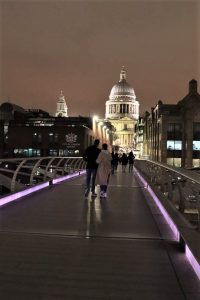
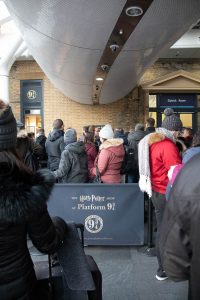
 Lately, I’ve been so caught up with stuff to do that I haven’t had time to post anything, not even a simple, quick post about our recent long weekend trip to London, which mainly turned into a Harry Potter tour (see last photo…and yes, I stood in line for about a half hour so that Stefano could take a photo of me waving a wand at Platform 9 and 3/4, King’s Cross station; I now am also the proud owner of a lovely Gryffindor scarf, currently my most precious possession 😀 ).
Note: we also met with a good British friend of ours AND visited a couple of museums. OThe best, though, was our tour of Westminster Abbey that included the Queen’s Diamond Jubilee Galleries, which were opened to the public less than a year ago after having been locked up for 700 years! How about that…
These Galleries are located in the medieval triforium, 52 feet above the Abbey’s floor (great views of the Abbey from up there, as you can imagine!!!).
In addition to the views, there are many fascinating artifacts to be seen in this lovely four-chamber “attic,” such as Queen Elizabeth I’s corset (no kidding…I couldn’t believe my eyes, either…)…but the thing I enjoyed the most was walking among the glass cabinets displaying the wooden effigies of dead kings and queens, some still with painted faces, eyes staring into space. Yes, rather eerie, but oh so interesting.
As I recall, the effigy custom began in the Middle Ages and lasted until the 18th century. In short, the fully dressed (wigs included) wooden effigies of dead monarchs were placed on top of their coffins for the funeral processions. I’d never seen anything like it…
So yes, lots of things to look at in the Galleries, including Mary II’s 17th century coronation chair, covered with graffiti carved by Westminster schoolboys and visitors in the 18th and 19th centuries…Hah, this happened even back then, eh!
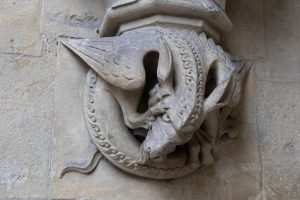
Unfortunately, no photos allowed in the Galleries (when I found that out, my expression pretty much mirrored that of one of Westminster’s stone dragons, see photo no. 2, above), but, no worries, you can find heaps of photos online.
Anyway, let’s set London aside for a minute.
I’ve been looking (again!) into how our circadian rhythm can affect how we absorb certain supplements. This is certainly not the first time I’ve posted on this topic…In fact, I just re-read my November 11 2007 post, which deals with a study linking circadian rhythm to chemo drug absorption. That is, an important factor in the administration of chemo drugs should be time of day…I wonder how many hospitals take circadian rhythm into consideration…?
Anyway. It seemed logical to me, even back in 2007, that the same would apply to anything we swallow, including our supplements, of course. Aspirin, e.g, is best taken in the evening, when it will not do as much damage to the lining of our stomach.
So there’s lots to be said for the circadian rhythm. I’m reading some more recent studies on this topic, but boyohboy, some of the jargon makes my brain go into DEEP sleep mode. I must persevere, though, because I might just find a pearl buried somewhere…
Has anyone done any research on this topic? I’d love to hear from you!
Thanks! 🙂



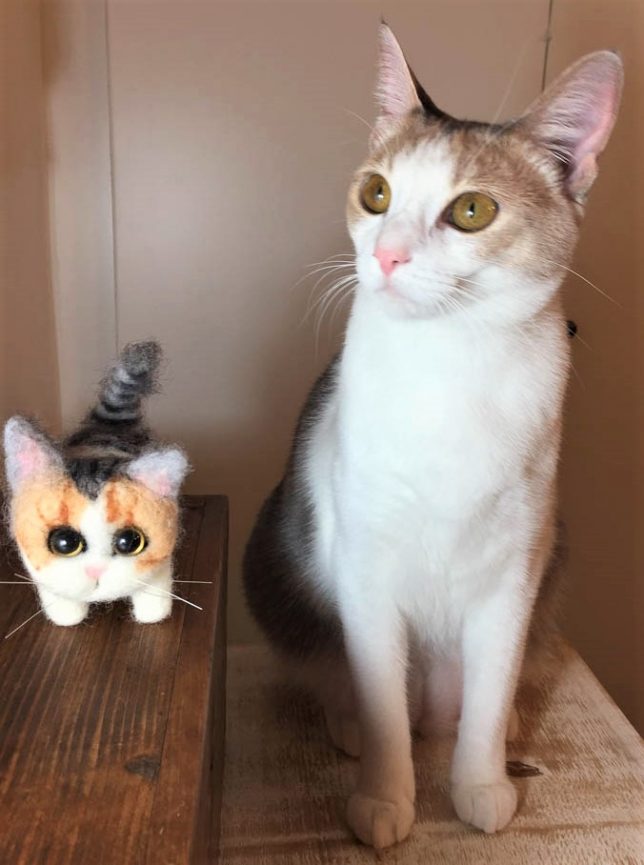 One of my best friends here in Florence gave me a lovely present the other day. It was supposed to be a Xmas present, but my friend was so excited and eager to see my reaction that she couldn’t wait until December.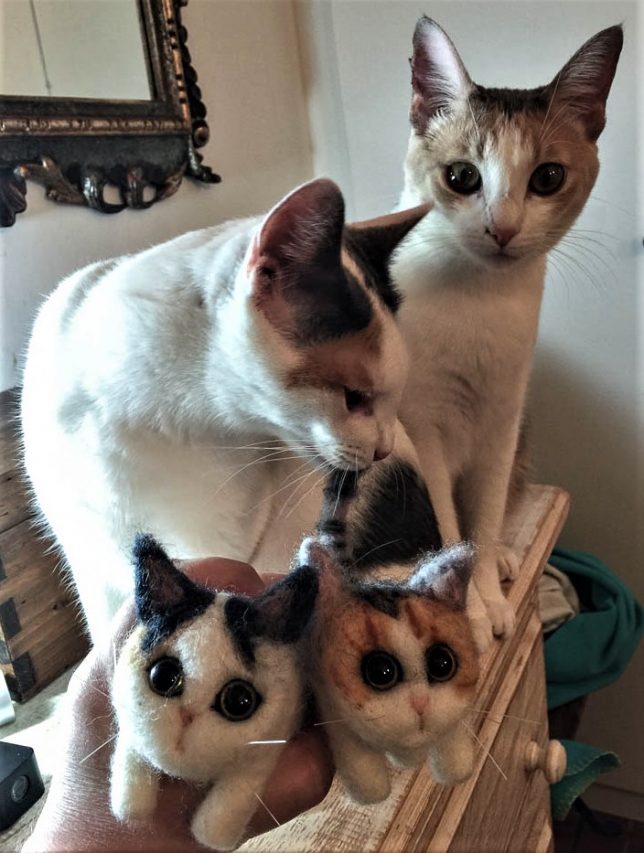
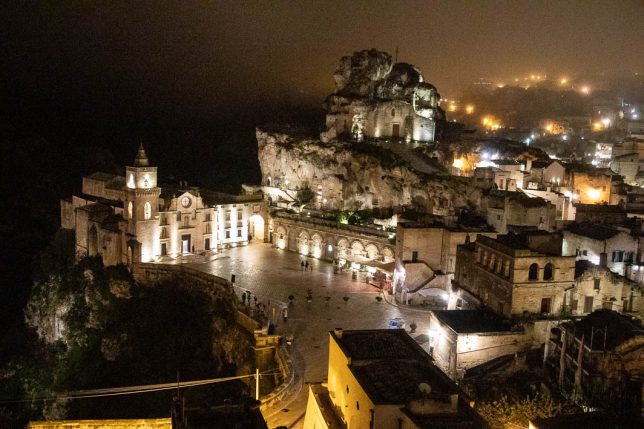
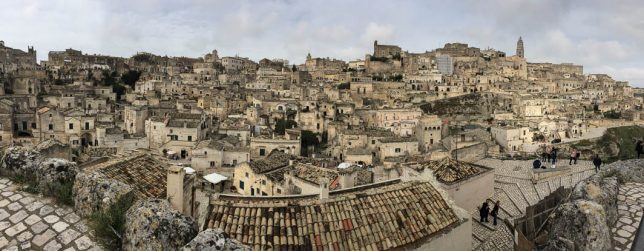
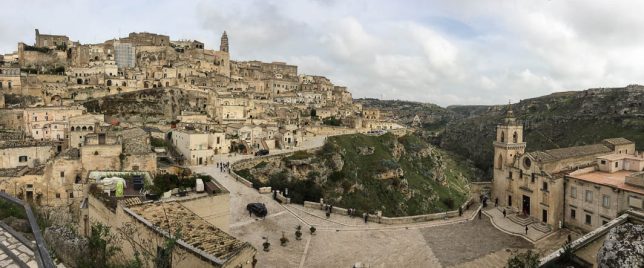 The weekend of November 1st was a long holiday weekend, so Stefano and I, and his aunt and uncle (yes, the uncle with MM), decided to visit the ancient southern Italian city of Matera, designated as a UNESCO World Heritage Site in 1993. It is also one of the OLDEST CONTINUOUSLY INHABITED cities in the entire world. How about that, eh!
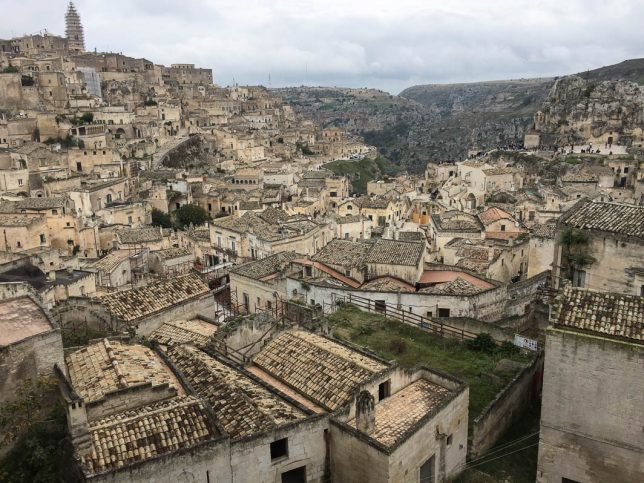 In 2014, Matera was also awarded the title of 2019 European city of culture and since then has become a big tourist attraction. By the time we managed to book a B&B, in fact, Matera was 97% booked!
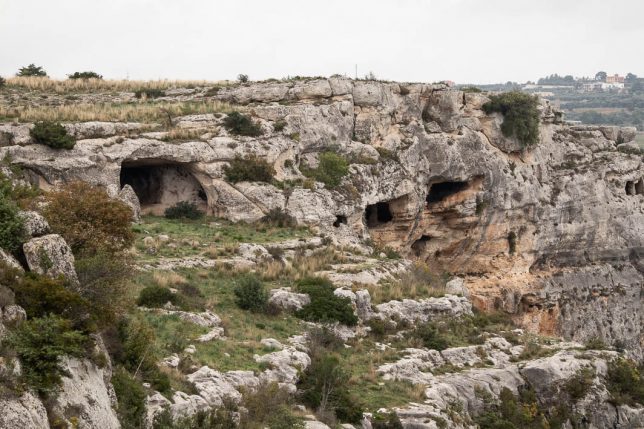
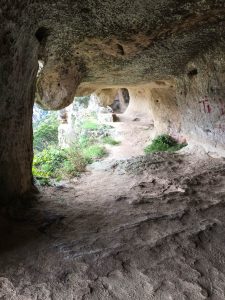 Matera is mainly famous for its Sassi (Italian for “Stones”), for its 1500 cave dwellings carved out of limestone and scattered all over the flanks of a steep ravine. These caves, dating to the Paleolithic (see photo on right), were expanded into slightly larger dwellings (the Sassi) by peasants and artisans in later eras. We visited one of the most famous cave dwellings inside the Sassi, but there were too many tourists inside to take any decent photos…You can look it up online, if you are curious. It’s called “Casa Grotta di Vico Solitario.” The cave on the right is much more ancient (no doors, e.g.!), and located in the Murgia National Park, that is, outside the Sassi. In the photo below you have a panoramic view of these more ancient caves…
 It’s no wonder that malaria, cholera, typhoid were common diseases in Matera. We were told that child mortality was at 50%. I’m surprised that number wasn’t higher…
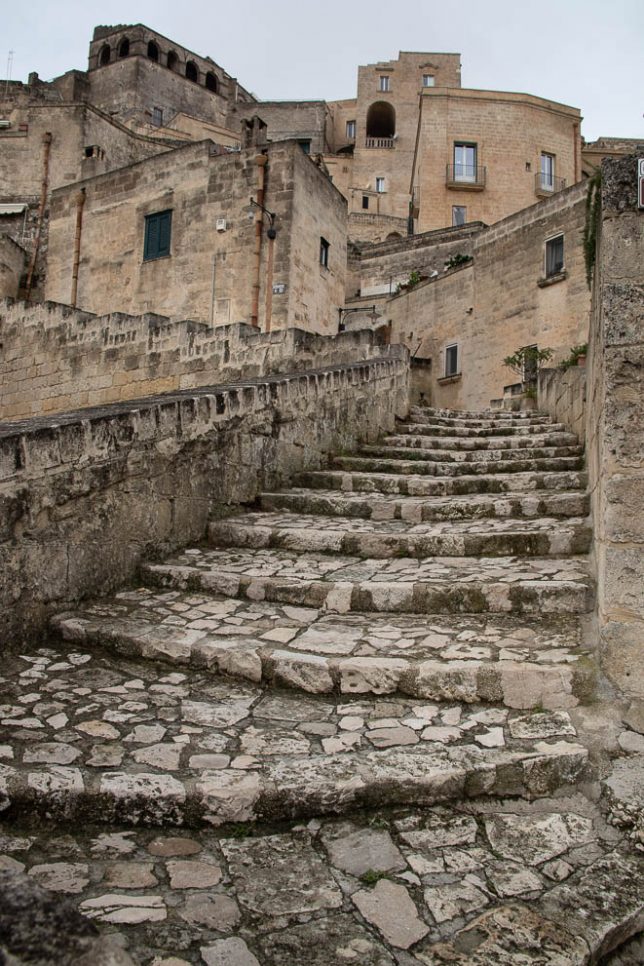 After this relocation, the Sassi were essentially left to rot…until 30 years later. In the 1980s, the local administration realized Matera’s tourism potential and began fixing up the ancient buildings and promoting the Sassi…
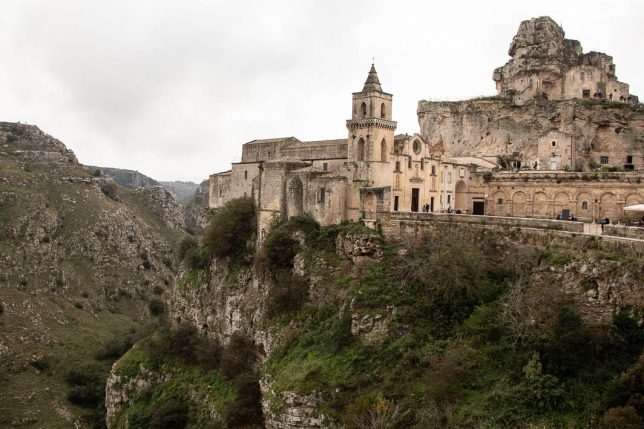 Unfortunately, it rained, and rained and rained, during most of our stay, which certainly added to Matera’s aura of mystery and, well, a bit of spookiness, too…But when, on the day we left (!), the sun came out, all I could say was “WOW!” The sun really made a difference…
 Oh, we also ate incredibly well in restaurants that I’d chosen because they used locally-sourced food…amazing…so YUMMY! We brought back with us some of the specialties we had enjoyed in Matera, including black chickpeas, which are grown in the Murgia National Park, located on the other side of the gorge.
 Oh, I guess it’s obvious that I am compleeeeeetely over my bronchial pneumonia…I have to admit that I still get tired easily, but…no big deal. I’m taking probiotics (after such heavy doses of antibiotics, probiotics are a MUST), as well as vitamins and minerals to boost my energy levels. All good!