Third year anniversary

This morning I was tidying up my bookcase when I came across my 2006 calendar…and noticed that I began taking curcumin on January 16th 2006. Wow. That was three years PLUS 2 days ago. Oh bother, I missed my third year curcumin anniversary by two days! How did that happen?


Going through the calendar reminded me of all the things that happened to me in 2006. In addition to “discovering” curcumin, I became a permanent citizen of Italy. So, in many ways, 2006 was a magnificent year. But in others, it was not so…magnificent.


My next door neighbour, a friendly, cheerful and kind man in his early 50s, had been diagnosed in the spring of 2005 with acute lymphocytic leukemia (ALL). He began doing chemotherapy straight away, within a week or so of his diagnosis. That summer, he almost died not once but twice…not from the leukemia but from a toxic reaction to the drugs. On both occasions, his wife was told that he wouldn’t make it through the night. But make it he did…each time.


In the fall, his doctors surprisingly (from my current viewpoint) recommended that he go ahead and have an allogeneic stem cell transplant. He agreed. A donor was found in Germany, and the transplant took place in late January of 2005 or early February of 2006. I remember that he was still home when I told him about curcumin. He was interested and said he might consider taking it after the transplant.


That never happened.


He had a toxic reaction to one of the anti-rejection drugs, cyclosporine, as I recall. I will spare you the details of his long agony. During that dreadful period, I spent a lot of time with his family, trying to be cheerful and encouraging. I didn’t go visit him in the hospital (only his wife and children were allowed to see him under extremely restricted circumstances), but I remember that he phoned me on one of his rare “good” days. That was our last conversation.


He died on April 19th, 2006. Exactly one month later, on May 19th, I came down with pleurisy (I came close to dying, myself…took me months to recover).


Looking back, 2006 was not an easy year. But I survived. And I found curcumin. I just wish that Massimo were here, too…taking curcumin and helping me with my research (he was a biologist, an enthusiastic plant expert…)…eh, today’s post brings back painful memories.


To end on a more cheerful note…on this anniversary, a special note of gratitude goes to Prof. Bharat Aggarwal who works at the MD Anderson Cancer Research Center in Texas. Without his encouragement, I might not have tried the amazing yellow-orange powder…

Turning yellow

Very busy days. No time to do research, no time to post. My cytogenetics draft is driving me mad, so I have set it aside for a few days, as my father wisely taught me to do. (The only problem with that is that I now have a HUGE file filled to the brim with unfinished or unpublished drafts…eh!) At any rate, today I will address another issue, one that has popped up again recently.


Last month I received a message from a myeloma list friend informing me that she began taking curcumin because her IgA was steadily increasing. On curcumin, she wrote, her IgA was still increasing but at a lower rate, which she found encouraging.


At that point she was taking three grams of curcumin a day. When she tried increasing to four grams, she noticed that, and I quote, yellow dye was being excreted from my skin. I noticed it when I dried my face and there was yellow on the towel. I also noticed that my nails were yellow. I know you have been taking curcumin at a higher dose for quite a while and wondered if you had that side effect and whether it bothered you if it did. In any case, I’ve reduced the dose to 2 grams a day and at that dose it seems OK–no yellow nails.


Last year, a blog reader/dear friend also reported a similar problem with the colour yellow. He was sweating yellow during the night…to the point of staining a brand new set of sheets.


Then, just a couple of days ago, I received a contact message from a blog reader informing me that her husband seems to be turning yellow. It was time for me to look into the matter.


The first of the three cases may be connected with the actual handling of curcumin, although my friend didn’t think so. But, in addition to being used for many medicinal purposes in India, turmeric (from which curcumin is extracted) is also used as a textile dye. Very true, curcumin stains like crazy. Whenever I handle the yellow-orange powder, I stain everything I touch. No matter how careful I am, curcumin always “outsmarts” me. My hands turn yellow. Everything I touch or wear turns yellow. And one day, jumping onto the kitchen counter just as I was measuring out my daily amount of curcumin powder, Piccolo, my male cat, managed to stain the white underside of his paws. Eh, he didn’t care for that at all and almost licked himself into a trance. His paws remained yellow for a few days…he was very upset.


Well, I finally did an online search to see if I could come up with an explanation of sorts. Almost immediately, I found a thread that dealt with this problem. Super!, I thought. Someone reported that Within 8 hours of taking one Curcumin capsule, however, the fingers on my right hand will begin to yellow along with small yellow splotches on the palm. The real strange thing is, my mother developes the exact same yellowing on her right hand. I know it’s not from handling the capsules, so does anyone have any clue what is causing this?


Other thread readers offered various suggestions and ideas, but then, at the end, the person who had introduced the yellowing topic confessed: Let the truth be told. I am a moron. Yep, it was just from the excess powder that was outside the capsules. It was even all around the top of the bottle, so simply opening it would get a small amount of the residue on my hand. I also know why I only noticed it in the morning. My apartment is lit with “yellow” light so I couldn’t see it. It was only until I went out on my deck in the morning with my coffee that I could notice the staining!


I reported this story because I thought it might be useful: even curcumin capsules can stain your fingers yellow. It still doesn’t seem to explain my three blog readers’ “yellowing” experiences…

In conclusion, all I can say is that I have never had inexplicable yellow sweat, yellow skin or yellow anything… The yellowing of my hands, face and clothes has always been caused by my own carelessness.

I am puzzled, I confess. I thought that perhaps those affected by yellowing should have their liver function tested (always a good idea, as part of a regular check-up)…I should note, though, that curcumin has a protective effect on the liver. I give up.

Any other thoughts?

The importance of translocations

Ever since I realized the implications of my MGUS and then SMM (well, to be precise, my 2005 bone marrow biopsy result talks about “multiple myeloma,” not “smoldering myeloma”…) diagnoses, I have been interested in studies about the progression of these two conditions to actively malignant myeloma.


A blog reader (thank you!) must have been reading my mind. He recently sent me a heap of studies dealing mainly with the issue of genetic codes in MGUS and myeloma, and that of the progression from MGUS to MM.


Even though it’s way too early to get into it all, one of these studies told me something that I didn’t know: chromosomal abnormalities, or translocations, occur in MGUS, too. So much for (my) believing that only myeloma folks developed wacky genes…At this point, though, I should reassure those with MGUS that a few abnormal chromosomes doesn’t mean that progression to myeloma is inevitable. Oh no, not at all. As I mentioned, though, it’s too early to get into it.


I just wanted to explain my silence, I guess. In the past couple of days I have been poring over piles of statistics, looking at graphs that make little or no sense to me, wading through discussions on translocations, not just those concerning the infamous chromosome 13 (deletion/non deletion), etc…and yes, I admit that it was all terribly overwhelming at first, but then I decided that I simply would try to understand what I possibly can…and set the rest aside, at least for the time being. After all, I cannot become an expert cytogeneticist overnight… As for posting a few words about these studies, well, I will give it a try. Soon, I hope.

In my free time, I have been following the interesting GMO (etc.) discussions on Fanatic Cook’s blog (I have a link here to her blog, just scroll down my Pages almost to the end). Among other items, she has a few interesting posts on genetically modified soy… I must say that I am full of admiration for this researcher, from whom I have learned so much…please visit her blog whenever you have a spare moment or two, you won’t regret it, I think. Here’s the general link: http://fanaticcook.blogspot.com/

In my next life, I want to be a marathon lounger

Yesterday my niece sent me the link to a video titled “An engineer’s guide to cats.” Amusing, see: http://tinyurl.com/9olzw8 (the mystery of today’s post title is therein revealed…)


And then, as if I had nothing better to do yesterday, hah!, I began watching a few YouTube cat videos…couldn’t help it, too cute. And I found the following:


Scuba cat: http://tinyurl.com/9n7tok Quite an amazing story, but certainly something that I would never try with my own cats!:


How to break up a cat/kitten fight (hehe): http://tinyurl.com/2z5beb You have to watch the whole thing…this particular clip was featured on the Jay Leno show.


Here is a collage of funny or cute cat clips: http://tinyurl.com/633j6y I had already seen many of them, like the cat chasing the bear, but hadn’t seen the tiny black kitten falling asleep (oooh so cute!), the cat playing ping pong and the cat jumping on water…and how about the cat arranging itself inside a glass? Or the one squeezing itself out of a bottle?

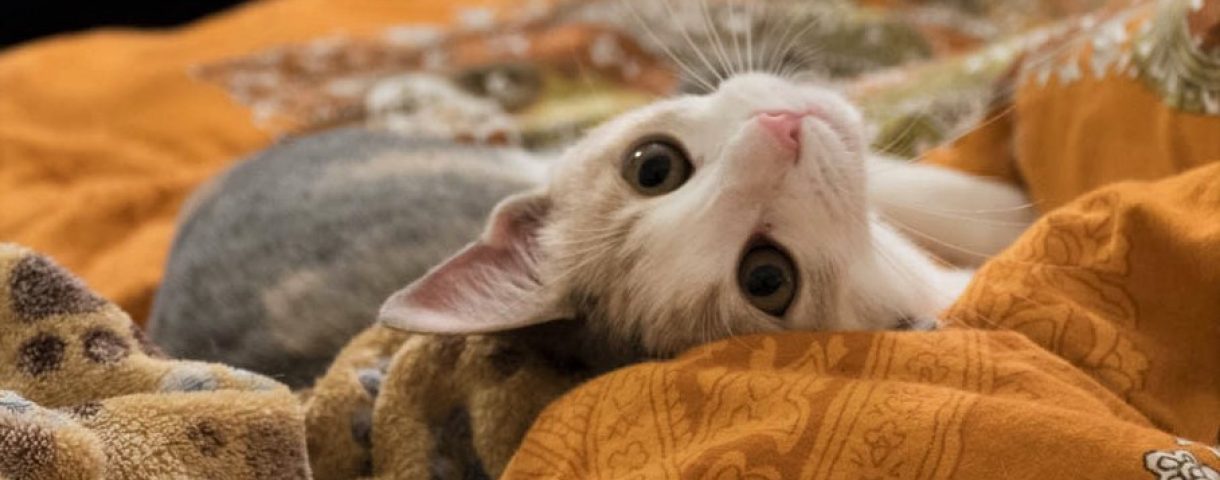
Watching all these cute cat videos made me want to rush out and buy a video camera to take films of my own cats, whose antics are certainly comparable in funniness and cuteness…Priscilla, who loves to drink water from the bathroom tap (see photo) and cuddle under my sweater (luckily, only during the cold weather months!) with only her tail peeking out….Peekaboo and Piccolo, who answer all my questions with their own meaningful meows and peculiar trills and chirps (note: they ignore me if I don’t use the correct question intonation…)…Puzzola, who loves getting (or stuffing herself) inside cardboard boxes of any size. If it’s a small box, she will stick her head inside and pretend not to notice that the rest of her body is totally visible.

Oh, and Piccolo and Peekaboo bump their foreheads to mine (Piccolo gives me such forceful bumps sometimes that he makes me take a step backwards). And all the funny and acrobatic jumping and playing and fighting that goes on in our house, usually instigated by Peekaboo, the fearless imp (I should have known I was in for some serious “trouble” when I first set eyes on her, about one and a half years ago, see photo)…the list goes on…and on…

Happy Birthday to one of my dear blogging friends! You know who you are! 🙂

Genistein and signalling pathways

Yesterday I went through the 2006 “International Journal of Cancer” study (abstract: http://tinyurl.com/7eady3), which discusses how genistein affects the transcription factor NF-kappaB and the Notch-1 signalling pathway in pancreatic cancer cells.


[Note 1: Notch signalling is crucial for the growth and survival of multiple myeloma cells, not just pancreatic cancer cells…see, for instance, these two “Blood” 2004 abstracts: http://tinyurl.com/9p7k5e and http://tinyurl.com/7f9vzw. So this discussion is relevant to us myeloma folks, too.]


The abstract informs us that Notch signalling helps maintain the balance between cell proliferation, differentiation and apoptosis, and thereby may contribute to the development of pancreatic cancer…this process is, however, blocked by genistein. And, by inhibiting Notch-1, genistein also blocks NF-kappaB, which mediates survival signals that inhibit apoptosis and promote cancer cell growth. This process also affects the genes controlled by NF-kappaB, as we will see in a sec.


The cancer cells have no way out…except death.


[Note 2: the implications of inhibiting the Notch/NF-kappaB signalling process gave another push to my idea of gathering in one place (say, an Excel spreadsheet) all the data I have collected in the past year or so…if only I had more free time, had a scientifically-oriented brain, and were more organized…eh. Well, my rambling all over the place will simply have to do for now. But I have to admit that even I get overwhelmed by all the info contained in my own blog!!! If I could condense it somehow…]


The full study begins with the usual cancer statistics…in this case, of course, those concerning pancreatic cancer, which has the worst prognosis among all major cancers. Apparently, though, people whose diets are high in soy are less likely to get this type of cancer, suggesting that a high intake of soy products may protect people against pancreatic cancer.


Basically, as anticipated in the abstract, the study demonstrates that the inhibition of Notch-1 blocks NF-kappaB, at least in part. And this process also hinders genes that are regulated by NF-kappaB, such as COX-2, cyclin D1, MMP-9, Bcl-2, Bcl-xL and survivin. Well, well, we meet again…these are all genes implicated in the survival and merrymaking of myeloma cells, so this is a very important point.


In conclusion, the study demonstrates that the administration of genistein leads to the death of pancreatic cancer cells. The researchers speculate that one possible mechanism by which genistein induces apoptosis is due to down-regulation of Notch-1, a gene that is abnormally activated in many human malignancies and keeps pancreatic cancer cells alive and well, as it does with other types of cancer cells (erythroleukemia and cervical cancer are mentioned here).


And, as we know from my December 29 post, genistein also kills myeloma cells AND increases bone formation…


Toxicity issues. I was actually somewhat reassured after perusing a report carried out by the National Toxicology Program (U.S. Dept of Health and Human Services) in 2006, see http://tinyurl.com/9voc22 Incidentally, it answers Chris’ question concerning chickpeas. Even though the main source of genistein is soy, much smaller amounts can also be found in Lentils, peas, kidney beans, peanuts, chickpeas, broccoli, cauliflower, and barley meal. The report concludes that genistein is safe for human (adult) consumption. In order to reach possibly harmful levels of genistein, we would have to swallow huge quantities of the stuff, more than 35 mg/kg a day. Yep, that’s a lot. In any event, the main potential toxicity has to do with reproductive issues, which is not a concern for me.


I also took a look at a more recent (=2008) NTP report (see: http://tinyurl.com/7z3gnd) that confirms that although genistein did show adverse effects with dietary exposures of 100 or 500 ppm, there were no clear adverse effects on the reproductive or developmental parameters measured at genistein concentrations ranging from less than 1 ppm (control diet) to 100 ppm, a range of doses producing serum concentrations achievable from the phytoestrogen content of human diets.


Well, the more I read, the more I am tempted to try genistein (only from a certified non-GMO source), but I have other things to test first…in the meantime, I will (try to) keep an eye on this substance, too…

Genistein and myeloma, part II

A blogging friend sent me the full genistein study (thanks!!!) recently published in “Phytotherapy Research” (abstract: http://tinyurl.com/7wwnku), a study that I mentioned in my December 29th post. It starts out with the usual dismal information about multiple myeloma, which is a B-cell malignancy characterized by the latent accumulation in bone marrow of secretory plasma cells with a low proliferative index and an extended life span and accounts for 1% of all cancers and more than 10% of all blood cancers…oh, and it remains incurable…


There follows a description of what happens when the transcription factor NF-kappaB gets constitutively activated (that simply means that it is activated all the time)…this is not good, as far as we myeloma folks are concerned, since it means that our myeloma cells are protected from apoptosis (=from kicking the bucket). Reading on…blablablabla…okay, the upshot: NF-kappaB is an important target for myeloma treatment. So far, we have learned nothing new.


The research team chose to test genistein, a predominant isoflavone found in soybeans, which has been shown to inhibit the growth of various cancer cells in vitro and in vivo without toxicity to normal cells. Genistein suppresses NF-kappaB and many of the genes that it regulates. And humans can consume it safely, so they say.


Results. The team tested two different myeloma cell lines that expressed a hyperactive NF-kappaB. The cells were treated with different amounts of genistein and doxorubicin. A very small amount of genistein was sufficient to suppress the activation of NF-kappaB. It also worked synergistically with doxorubicin, leading to greater antitumor activity in vitro. Good.


For the more technically-oriented, genistein also inhibited Akt phosphorylation (when this happens, NF-kappaB doesn’t travel to the nucleus, which is a GOOD thing, take my word for it) and down-regulated ICAM-1, cyclin D, bcl-2 and bcl-xL (=four wicked genes).


Okay, but does genistein kill myeloma cells? Yes. How? Well, The precise molecular mechanism is not clear, the researchers admit. But wowie zowie, check this out: like curcumin, zerumbone and cyclopamine, genistein inhibits the Notch-1 pathway…does anyone remember what that pathway is? Right, it has to do with STEM cells…well, this might tip the balance in genistein’s favour, as far as I am concerned…yes, this is good news indeedie! I am so glad I read the full study!


Thanks to my big-hearted blogging friend, I have in my possession the 2006 genistein-Notch full study, which is next on my reading list…in the meantime, scribble scribble, a mental note: make more chickpea curries for dinner…

Healthy advice

I don’t remember who sent this bit of important health news to me…well, no matter. I thought I would publish it today since it is closely related to my recent post on carbohydrates. It gives advice on what we (=especially native English speakers) should eat and why…


CONCERNED ABOUT TOO MANY CARBS IN YOUR DIET?


For those of you who watch what you eat, here’s the final word on nutrition and health. It’s a relief to know the truth after all those conflicting nutritional studies.


1. The Japanese eat very little fat and suffer fewer heart attacks than Americans.


2. The Mexicans eat a lot of fat and suffer fewer heart attacks than Americans.


3. The Chinese drink very little red wine and suffer fewer heart attacks than Americans.


4. The Italians drink a lot of red wine and suffer fewer heart attacks than Americans.


5. The Germans drink a lot of beers and eat lots of sausages and fats and suffer fewer heart attacks than Americans.


CONCLUSION

Eat and drink what you like. Speaking English is apparently what kills you.

Holiday laziness

I have tried to do some research in this period, but inspiration has been eluding me…well, okay, I admit that there has been another reason for my not having posted in the past few days. Stefano is home for the holidays, and we have been spending as much time together as possible. We have even been straightening up the house…anything, as long as we are together. And, since he has a nasty cough and cold, we have also been following Peekaboo’s wise example (photo taken yesterday morning).

Well, the holiday is almost over (sigh)…just a few more days…

New Year resolutions…

The first time I heard of these things was when I moved back to the U.S. in the early 1980s. I grew up in Italy, you see, and my Italian friends never made resolutions. What we did on New Year’s Eve was get together for a never-ending feast with all sorts of wonderful homemade food and play traditional and very noisy New Year’s games. At midnight, we kissed, toasted to the new year and had a bite of all the traditional foodstuffs that are thought to bring good luck and wealth. Then, more games, more fun and laughter, more toasting to the new year. But I remember no talk of resolutions.


At any rate, for my first few years in the U.S., I thought that New Year’s resolutions were simply brilliant, so every year I did my best to make a list filled with good intentions. I soon realized that it was pointless. I would simply never do this and would certainly never ever do that. In the end, I didn’t see the point of promising to do something that I knew I wouldn’t get around to doing, so I gave up. It would have been terribly two-faced of me…hmmm, and as it turns out, two-faced is exactly right…


Yesterday I became slightly curious about the origin of New Year resolutions, so I looked it up. It would seem that this tradition dates back to 153 B.C., when the Roman god Janus, the guardian of doors and gates, of beginnings and endings, was placed at the head of the calendar.


The peculiarity about Janus was that he had two faces (aha!), one facing forward, one backwards, so that when he walked into a room, I read on one website, he could say both “hello” and “goodbye.” Hehe, fancy that… At any rate, because of his ability to see into the past with one face and into the future with the other, Janus became the symbol of New Year’s resolutions. So the idea that we all get a fresh start at the beginning of the new year is nothing new, since this is also the time when ancient Romans would ask for forgiveness from their enemies and vow to live in peace…


There are a number of good luck rituals in the Italian New Year festivities. As I mentioned last year, you have to wear something red (red underwear sales soar in this period). You also have to eat lentils during dinner on December 31st (we eat lentils on January 1st, too, to cover all bases). And don’t forget, quello che si fa il primo dell’anno si fa tutto l’anno, that is, what you do on the first day of the year you will do for the rest of the year…so plan only FUN stuff for tomorrow and under no circumstances bring out the vacuum cleaner!


Well, whether we make lists of resolutions/follow any superstitious rituals or not, may Janus beam down on all of us with both faces during 2009…and shower us with good health and happiness. Felice Anno Nuovo!!!