I am all in favour of drug safety and regulation, of course, but I recently heard some news that concerns me, to put it mildly. A friend sent me a Life Extension Foundation article on the controversial “Food and Drug Administration Revitalization Act” (S1082), sponsored by Sen. Kennedy with the support of Sen. Enzi. It has already passed a Senate subcommittee and will soon (tomorrow???) go to the Senate floor.
This “Revitalization” Act gives new powers to the FDA that could affect all of us who are taking supplements. If the bill passes, the FDA would no longer be a theoretically impartial agency that is supposed to regulate drug safety: It would officially and unambiguously put the U.S. government in the drug business, where it could license pharmaceuticals and collect royalties on their sale. For obvious reasons, this is a particularly dangerous situation for consumers. Government should be regulating drug companies, not joining them as partners in profit. (quoted from: http://www.newstarget.com/021811.html) With this bill, impartiality goes out the window. Furthermore, taxpayers will foot the bill for drug development and then be charged outrageous prices for the drugs. [ ] This new bill panders to concerns of Americans regarding the safety of drugs. This legitimate worry is used by Kennedy and Enzi to garner support when in reality the bill does just the opposite – exposing Americans to almost unfathomable new drug risks and dangers while simultaneously making it possible to remove super safe, therapeutic, and helpful dietary supplements. (from http://tinyurl.com/33bclq).
The worst part is that, based on S1082, the FDA could classify as drugs any vitamins, supplements, herbs and other natural substances, even water when it is used to “treat” dehydration. Water? Gimme me a break! So we might not be able to obtain any of our supplements without a medical prescription. Not to mention the rise in cost to us consumers. Would we be able to afford a simple bottle of multivitamins? Would I be able to afford my curcumin? Does this make ANY sense? You can read the full text of S1082 at: http://tinyurl.com/2kqx9j And if you would like to do something about it, please please please go to: http://www.lef.org/featured-articles/consumer_alert_042707.htm. This LEF page enables you to send an e-mail to your representatives and senators telling them to vote NO on this awful bill. Just click on the take action now button. Or call your senators and let them know how you feel about this. Please do it. Now.
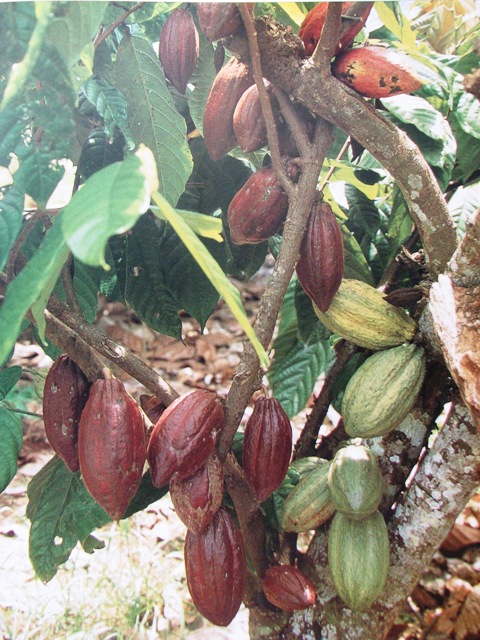 a chocolate bar, let me add (sadly) that during the chocolate-making process as much as 90 % of flavonoids are destroyed: cocoa beans are left to ferment in order to get rid of some of the bitterness caused by the flavonoids, and are then roasted. Is there a solution? Sure, look for chocolate bars made with pure cocoa, without any sugars or artificial sweeteners, and forget about milk chocolate. I have tried a 100 % chocolate bar, which is not as pure as what the Kuna drink but will have to suffice, since I don’t have a cacao tree in my back yard.